Nico Ravanilla

Political economist · UC San Diego

Nico Ravanilla

Empirical political economist studying the political economy of development in Southeast Asia. I design large-scale field experiments with governments, multilateral institutions, and civil society, and my current work uses the Anthropic Economic Index to trace the early labor-market effects of generative AI in the Global South.

Nico Ravanilla
Now
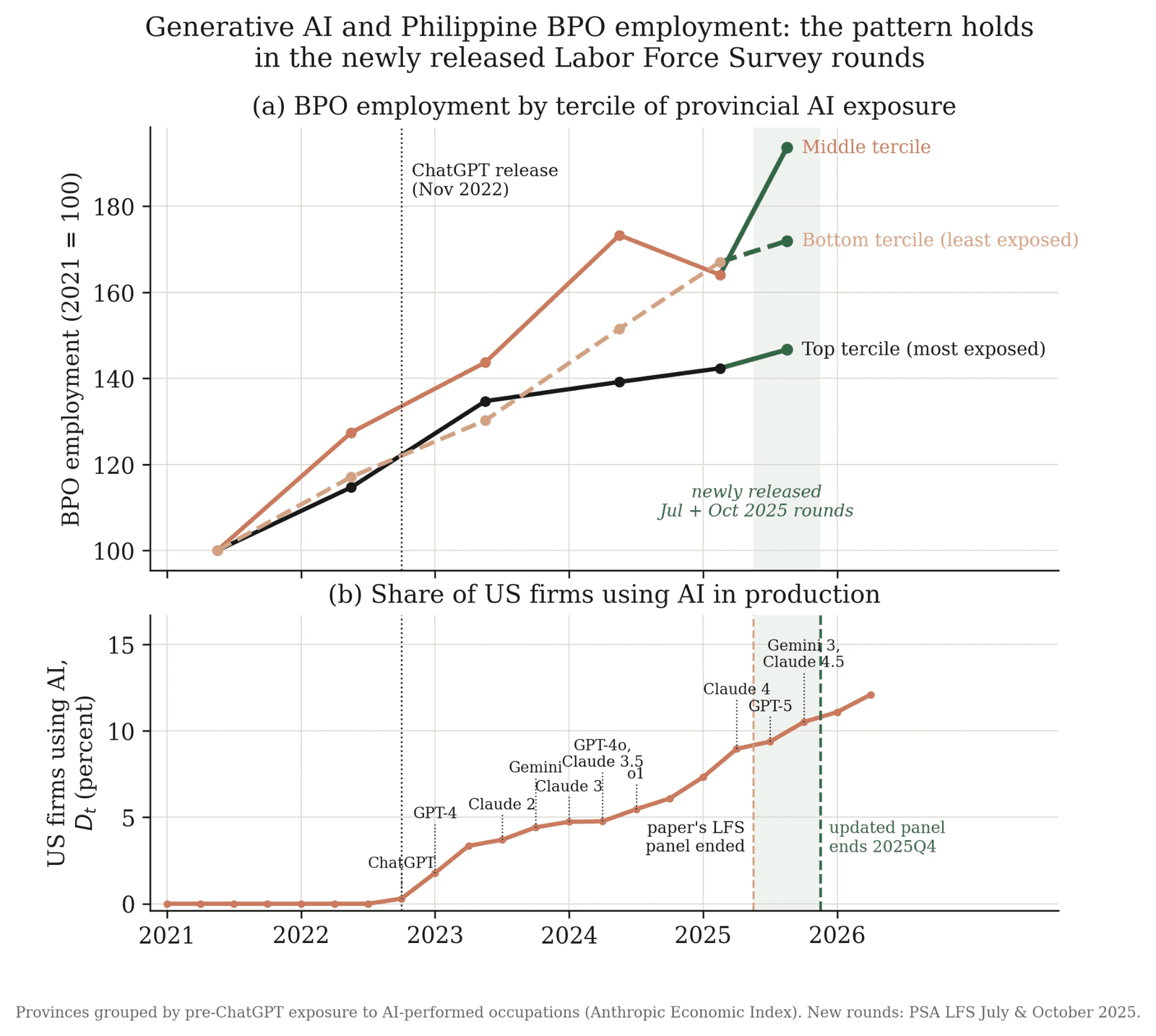
  • New working paper: “Early Signs of the Generative AI Labor Market Shock in the Global South,” using the Anthropic Economic Index and Philippine BPO data.
  • New in Asian Survey: “The Philippines in 2025: Midterm Elections and the Reordering of Power, Policy, and Posture.”
  • Making videos on AI-era research and analyst careers on YouTube, and building Dalumat.ai.
01

Selected research

Google Scholar →

The Posturing Premium: How Empty Threats Can Benefit Leaders in Weak Countries

Renard Sexton and Nico Ravanilla · American Journal of Political Science · Forthcoming

Why leaders in weak countries posture with empty threats, and what it earns them.

PDF
Abstract

This study examines ‘theatrical’ foreign policy crises, an understudied part of international relations that is especially important among weaker nations. We argue that for less powerful countries often the symbolic statement or threat is the action itself, with parties to a conflict implicitly acknowledging that there is little real bargaining and no real shadow of war. Instead of the traditional audience cost, we hypothesize the opposite: a bump in political approval that accrues to leaders of weak nations when they make empty threats in crises of sovereignty, something we call a “posturing premium.” Examining the case of Southeast Asian nations abutting the South China Sea, we employ five survey experiments across four countries over the course of three original annual survey waves to test this proposition. We find that for foreign policy crises that are linked to sovereignty or national pride, leaders can generate a posturing premium by making threats that they later back down from, in contrast with existing empirical findings related to audience costs. This premium is significantly higher when empty threats are made against a strong adversary, rather than a weak one. However, when foreign policy crises are not plausibly related to sovereignty or territory, the usual audience costs dynamics return; this holds for both real and hypothetical crises. We validate the “weak country” scope condition by conducting an extension in a militarily stronger country, Japan, that does not find a posturing premium for comparable crises.

Deadly Populism: How Local Political Outsiders Drive Duterte's War on Drugs in the Philippines

2022

Nico Ravanilla, Renard Sexton, and Dotan Haim · Journal of Politics 84(2): 1035-1056

Local political outsiders, not entrenched incumbents, drove the deadliest phase of the drug war.

Winner, 2019 APSA Southeast Asian Politics Group Best Paper Award (Open Category)

Link
Abstract

Around the world, populists have won elections on the strength of crowd-pleasing, but norm-defying, policy proposals. Although effective at mobilizing support at election time, these policies are often difficult to implement in practice because populists lack allies throughout the political system. Examining President Rodrigo Duterte's brutal War on Drugs in the Philippines, we find that mayors excluded from existing establishment patronage networks filled this critical implementation gap. Employing regression discontinuity and difference-in-differences approaches, we demonstrate that outsider mayors received 40% lower public works appropriations and, in turn, executed Duterte's drug war much more aggressively. Outsider-led municipalities had 40% more antidrug incidents and 60% more extrajudicial killings by police. The results illustrate an important trade-off between patronage politics and corruption (politics as usual) and violent democratic backsliding.

Brokers, Social Networks, Reciprocity, and Clientelism

2022

Nico Ravanilla, Dotan Haim, and Allen Hicken · American Journal of Political Science 66(4): 795-812

How brokers use social networks and norms of reciprocity to mobilize voters in the Philippines.

Link
Abstract

Although canonical models of clientelism argue that brokers use dense social networks to monitor and enforce vote buying, recent evidence suggests that brokers can instead target intrinsically reciprocal voters and reduce the need for active monitoring and enforcement. Combining a trove of survey data on brokers and voters in the Philippines with an experiment-based measure of reciprocity, and relying on local naming conventions to build social networks, we demonstrate that brokers employ both strategies conditional on the underlying social network structure. We show that brokers are chosen for their central position in networks and are knowledgeable about voters, including their reciprocity levels. We then show that, where village social networks are dense, brokers prefer to target voters that have many ties in the network because their votes are easiest to monitor. Where networks are sparse, brokers target intrinsically reciprocal voters whose behavior they need not monitor.

Sustained Government Engagement Improves Subsequent Pandemic Risk Reporting in Conflict Zones

2021

Dotan Haim, Nico Ravanilla, and Renard Sexton · American Political Science Review 115(2): 717-724

Government outreach in conflict zones pays off later: villages engaged before Covid-19 reported risk more reliably during it.

Link
Abstract

Community information sharing is crucial to a government's ability to respond to a disaster or a health emergency, such as a pandemic. In conflict zones, however, citizens and local leaders often lack trust in state institutions and are unwilling to cooperate, risking costly delays and information gaps. We report results from a randomized experiment in the Philippines regarding government efforts to provide services and build trust with rural communities in a conflict-affected region. We find that the outreach program increased the probability that village leaders provide time-sensitive pandemic risk information critical to the regional Covid-19 Task Force by 20%. The effect is largest for leaders who, at baseline, were skeptical about government capacity and fairness and had neutral or positive attitudes towards rebels. A test of mechanisms suggests that treated leaders updated their beliefs about government competence and shows that neither security improvement nor project capture by the rebels are primary drivers. These findings highlight the important role that government efforts to build connections with conflict-affected communities can play in determining public health outcomes during times of national emergencies.

Peer-reviewed articles

  • 2026

    The Philippines in 2025: Midterm Elections and the Reordering of Power, Policy, and Posture

    Nico Ravanilla · Asian Survey 66(2): 312-322

    Link
    Abstract

    This year-ender examines Philippine politics in 2025 through the lens of the May midterm elections and their effects on political, economic, and foreign policy incentives. As elections approached, institutional reform stalled and unresolved elite rivalries were reorganized into electoral competition, most visibly through impeachment efforts, alliance breakdowns, and Senate contests. Economic performance remained narrowly based, driven primarily by consumption amid weak investment, persistent planning constraints, and limited structural change, yet sufficiently stable to reduce pressure for difficult reforms. At the same time, corruption in infrastructure became unusually visible, exposing long-standing patterns of politically mediated contracting but without producing durable accountability. In foreign affairs, sustained pressure from China in the West Philippine Sea reinforced a familiar strategy centered on presence, legal framing, and alliance signaling rather than resolution. The result was continuity rather than transformation, as power, policy, and posture were reordered by electoral incentives rather than institutional change.

  • The Posturing Premium: How Empty Threats Can Benefit Leaders in Weak Countries

    Renard Sexton and Nico Ravanilla · American Journal of Political Science · Forthcoming

    PDF
    Abstract

    This study examines ‘theatrical’ foreign policy crises, an understudied part of international relations that is especially important among weaker nations. We argue that for less powerful countries often the symbolic statement or threat is the action itself, with parties to a conflict implicitly acknowledging that there is little real bargaining and no real shadow of war. Instead of the traditional audience cost, we hypothesize the opposite: a bump in political approval that accrues to leaders of weak nations when they make empty threats in crises of sovereignty, something we call a “posturing premium.” Examining the case of Southeast Asian nations abutting the South China Sea, we employ five survey experiments across four countries over the course of three original annual survey waves to test this proposition. We find that for foreign policy crises that are linked to sovereignty or national pride, leaders can generate a posturing premium by making threats that they later back down from, in contrast with existing empirical findings related to audience costs. This premium is significantly higher when empty threats are made against a strong adversary, rather than a weak one. However, when foreign policy crises are not plausibly related to sovereignty or territory, the usual audience costs dynamics return; this holds for both real and hypothetical crises. We validate the “weak country” scope condition by conducting an extension in a militarily stronger country, Japan, that does not find a posturing premium for comparable crises.

  • 2026

    How Street-Level Bureaucrats' Traits Affect Community Leaders' Assessments of the Government

    Nico Ravanilla, Dotan Haim, and Matthew Nanes · Journal of Politics 88(1)

    Link
    Abstract

    Research shows that bureaucrats' performance is shaped by their personal traits, such as public service motivation, cognitive ability, grit, and “big five” personality. What impact do these traits have on citizen assessments of service delivery and governance? To test this question, we randomly assigned police officers to villages during a community-oriented policing program in the Philippines. This program involved meetings between police officers and community leaders, citizens who serve as key conduits between the population and the state. We find that community leaders' assessments of individual officers were meaningfully affected by officers' personal traits, but those traits matter less for assessments of broader institutional efficacy. These findings suggest that bureaucrats' traits can improve public service provision by shaping how citizens approach encounters with specific government representatives. However, they place limits on the suggestion that exceptionally positive (or exceptionally negative) bureaucrats can shape attitudes towards state institutions more generally.

  • 2025

    How Does Community Policing Affect Police Attitudes? An Experimental Test and a Theory of Bureaucrat-Citizen Contact

    Dotan Haim, Matthew Nanes, and Nico Ravanilla · American Political Science Review 119(4): 1983-2001

    Winner, 2023 APSA Southeast Asian Politics Group Best Paper Award (Open Category)

    Link
    Abstract

    In contrast to the expansive work on how community policing affects citizens' attitudes toward police, existing research says little about how community policing affects officers' attitudes toward citizens. We examine officer-facing outcomes using an experiment in the Philippines, in which a random subset of a province's 705 officers were assigned to intensive community policing activities for seven months. Treatment officers saw improved understanding of citizen concerns, but did not develop greater empathy or trust toward civilians, nor an increased sense of accountability for citizen-facing misconduct. We build from the experiment to develop an inductive theory of bureaucrat-citizen contact, relying on qualitative observations and exploratory analyses of heterogeneous effects. We propose that contact with citizens is only likely to improve attitudes among frontline bureaucrats who are not ex-ante embedded in their communities. Moreover, contact may have negative effects when it reveals threats to bureaucrats' personal safety.

  • 2024

    The Extraordinary Effect of Religious Sect Endorsements on Vote Choice: Evidence from Iglesia ni Cristo's “Vote as One” Teaching

    Nico Ravanilla · Comparative Political Studies 58(13): 2755-2794

    Link
    Abstract

    Sects and strict denominations are growing more rapidly and retaining members better than mainstream religions. To what extent do they influence vote choice? I investigate whether the Iglesia ni Cristo (INC), a religious sect in the Philippines, can compel all members to “vote as one” and support a full ticket of endorsed candidates. Using a triple difference identification strategy, I show that the municipal-level vote-shares of INC-endorsed national candidates are unit elastic with respect to the share of INC voters across municipalities. Conventional low-information rationality models of voting cannot fully explain this. But augmented with social voting in which actions of other group members inform the objective function of voters, a voting model with religious sect endorsements can produce extremely large behavioral responses. These findings have implications on policy as well as on our understanding of strict religions' influence on politics.

  • 2023

    Poverty, Social Networks, and Clientelism

    Nico Ravanilla and Allen Hicken · World Development 162(106128)

    Link
    Abstract

    Why are the poor susceptible to clientelism, and what factors shield them from the influence of vote buying? We explore the role of both formal and informal social networks in shaping the likelihood of being targeted with private inducements. We argue that when the poor lack access to formal social networks, they become increasingly reliant on vote buying channelled through informal networks. To test our theory, we build the informal, family-based network linkages between voters and local politicians spanning a city in the Philippines. We then collect survey data on formal network connections, electoral handouts, and voting behaviour of 900 voters randomly drawn from these family networks. We show first that campaigns disproportionately target poorer voters. We then show that familial ties further influence targeting among poor voters. Finally, we show that access to formal networks such as workers' associations mitigate voter fears of punishment for failing to reciprocate.

  • 2023

    Fire Alarms for Police Patrols: Experimental Evidence on Co-Production of Public Safety

    Matthew Nanes, Nico Ravanilla, and Dotan Haim · Journal of Politics 85(3): 1017-1032

    Link
    Abstract

    Effective public goods provision requires coproduction by both citizens and the government. Search costs that complicate citizens' ability to share information constitute a critical and understudied impediment to this coproduction. We experimentally evaluate search costs in a rural, conflict-affected province of the Philippines. We randomize the rollout of a police hotline that dramatically reduces the costs of reporting and compare it against both the status quo and an alternative intervention that builds trust but does not affect search costs. The hotline increased the likelihood of reporting crimes by 10-19 percentage points. The intervention reduced perceived insurgent activity but had no perceptible impact on ordinary crime. Our findings suggest that addressing search costs substantially improves service delivery, potentially explaining why policies imported from higher-capacity countries may fail to achieve results in developing contexts.

  • 2023

    When Legislators Don't Bring Home the Pork: The Case of Philippine Senators

    Nico Ravanilla and Allen Hicken · Political Science Research & Methods 11(4): 785-803

    Link
    Abstract

    Research in legislative politics suggests that the desire to get reelected encourages legislators to “bring home the pork” by delivering electorally rewarding, targeted spending. This is particularly true where the electoral system encourages incumbents to cultivate a personal vote. We analyze how Philippine Senators spend their Constituency Development Fund (CDF) and using the staggered elections to identify variation in reelection status, we show that senatorial reelectionists do not always bring home the pork. Because Philippine Senators are elected by plurality-at-large voting by the national electorate, they tend to spend their CDF allotments closer to elections but avoid allocating them disproportionately to their local strongholds. These findings illustrate how electoral rules can deter targeted spending but lead legislators to find alternative ways to build a personal vote.

  • 2022

    Voting in Clientelistic Social Networks: Evidence from the Philippines

    Nico Ravanilla, Michael Davidson, and Allen Hicken · Comparative Political Studies 55(10): 1663-1697

    Link
    Abstract

    In clientelistic environments, voters want to know which politicians are most likely to deliver on targeted benefits. We argue that in these contexts, voters use their social proximity with candidates as heuristics to inform vote choice. To test our theory, we rely on local naming conventions to reconstruct family networks spanning one whole city in the Philippines and assess blood and marriage links between voters and local candidates. We then collect survey data on pre-election candidate leanings and actual voting behavior of 894 randomly drawn voters. We show that the degrees of separation between voters and candidates explain not only aggregate electoral outcomes, as previous studies have found, but also individual vote choice, controlling for pre-election leanings. We demonstrate that this is because private inducements are channeled through family networks. These findings highlight the electoral importance of social proximity with politicians as an information shortcut when voters are choosing whom to support at the polls.

  • 2022

    Deadly Populism: How Local Political Outsiders Drive Duterte's War on Drugs in the Philippines

    Nico Ravanilla, Renard Sexton, and Dotan Haim · Journal of Politics 84(2): 1035-1056

    Winner, 2019 APSA Southeast Asian Politics Group Best Paper Award (Open Category)

    Link
    Abstract

    Around the world, populists have won elections on the strength of crowd-pleasing, but norm-defying, policy proposals. Although effective at mobilizing support at election time, these policies are often difficult to implement in practice because populists lack allies throughout the political system. Examining President Rodrigo Duterte's brutal War on Drugs in the Philippines, we find that mayors excluded from existing establishment patronage networks filled this critical implementation gap. Employing regression discontinuity and difference-in-differences approaches, we demonstrate that outsider mayors received 40% lower public works appropriations and, in turn, executed Duterte's drug war much more aggressively. Outsider-led municipalities had 40% more antidrug incidents and 60% more extrajudicial killings by police. The results illustrate an important trade-off between patronage politics and corruption (politics as usual) and violent democratic backsliding.

  • 2022

    Organizational Identity and Positionality in Randomized Control Trials: Considerations and Advice for Collaborative Research Teams

    Nicholas Haas, Katherine Haenschen, Tanu Kumar, Costas Panagopoulos, Kyle Peyton, Nico Ravanilla, and Michael Sierra-Arévalo · PS: Political Science & Politics 55(4): 749-753

    Link
  • 2022

    Brokers, Social Networks, Reciprocity, and Clientelism

    Nico Ravanilla, Dotan Haim, and Allen Hicken · American Journal of Political Science 66(4): 795-812

    Link
    Abstract

    Although canonical models of clientelism argue that brokers use dense social networks to monitor and enforce vote buying, recent evidence suggests that brokers can instead target intrinsically reciprocal voters and reduce the need for active monitoring and enforcement. Combining a trove of survey data on brokers and voters in the Philippines with an experiment-based measure of reciprocity, and relying on local naming conventions to build social networks, we demonstrate that brokers employ both strategies conditional on the underlying social network structure. We show that brokers are chosen for their central position in networks and are knowledgeable about voters, including their reciprocity levels. We then show that, where village social networks are dense, brokers prefer to target voters that have many ties in the network because their votes are easiest to monitor. Where networks are sparse, brokers target intrinsically reciprocal voters whose behavior they need not monitor.

  • 2021

    Community Policing Does Not Build Citizen Trust in Police or Reduce Crime in the Global South

    Graeme Blair, Jeremy M. Weinstein, Fotini Christia, et al. (incl. Nico Ravanilla) · Science 374(6571): eabd3446

    Link
    Abstract

    Is it possible to reduce crime without exacerbating adversarial relationships between police and citizens? Community policing is a celebrated reform with that aim, which is now adopted on six continents. However, the evidence base is limited, studying reform components in isolation in a limited set of countries, and remaining largely silent on citizen-police trust. We designed six field experiments with Global South police agencies to study locally designed models of community policing using coordinated measures of crime and the attitudes and behaviors of citizens and police. In a preregistered meta-analysis, we found that these interventions led to mixed implementation, largely failed to improve citizen-police relations, and did not reduce crime. Societies may need to implement structural changes first for incremental police reforms such as community policing to succeed.

  • 2021

    Sustained Government Engagement Improves Subsequent Pandemic Risk Reporting in Conflict Zones

    Dotan Haim, Nico Ravanilla, and Renard Sexton · American Political Science Review 115(2): 717-724

    Link
    Abstract

    Community information sharing is crucial to a government's ability to respond to a disaster or a health emergency, such as a pandemic. In conflict zones, however, citizens and local leaders often lack trust in state institutions and are unwilling to cooperate, risking costly delays and information gaps. We report results from a randomized experiment in the Philippines regarding government efforts to provide services and build trust with rural communities in a conflict-affected region. We find that the outreach program increased the probability that village leaders provide time-sensitive pandemic risk information critical to the regional Covid-19 Task Force by 20%. The effect is largest for leaders who, at baseline, were skeptical about government capacity and fairness and had neutral or positive attitudes towards rebels. A test of mechanisms suggests that treated leaders updated their beliefs about government competence and shows that neither security improvement nor project capture by the rebels are primary drivers. These findings highlight the important role that government efforts to build connections with conflict-affected communities can play in determining public health outcomes during times of national emergencies.

  • 2019

    The Philippine Elections: Has Politics Changed Under Duterte?

    Nico Ravanilla · Asian Politics & Policy 11(4): 674-678

    PDF
  • 2018

    Temptation in Vote Selling: Evidence from a Field Experiment in the Philippines

    Allen Hicken, Stephen Leider, Nico Ravanilla, and Dean Yang · Journal of Development Economics 131: 1-14

    Link
    Abstract

    We test the predictions of a behavioral model of transactional electoral politics in the context of a randomized anti-vote-selling intervention in the Philippines. We model selling one's vote as a temptation good: it creates positive utility for the future self at the moment of voting, but not for past selves who anticipate the vote-sale. We also allow keeping or breaking promises regarding vote-selling to affect utility. Voters who are at least partially sophisticated about their vote-selling temptation can thus use promises not to vote-sell as a commitment device. An invitation to promise not to vote-sell is taken up by a majority of respondents, reduces vote-selling, and has a larger effect in electoral races with smaller vote-buying payments. The more effective promise treatment reduces vote-selling in the smallest-stakes election by 10.9 percentage points. Inviting voters to make another type of promise, to accept vote-buying payments but to nonetheless “vote your conscience,” is significantly less effective. The results are consistent with voters being partially (but not fully) sophisticated about their vote-selling temptation.

  • 2015

    Measuring Vote Selling: Field Evidence from the Philippines

    Allen Hicken, Stephen Leider, Nico Ravanilla, and Dean Yang · American Economic Review: Papers & Proceedings 105(5): 352-56

    Link
    Abstract

    Using data from an anti-vote-buying field experiment we conducted in the Philippines, we report and validate a proxy measure for vote-selling. We demonstrate that our proxy measure, vote-switching, changes as expected with voter preferences and monetary offers from candidates. Voters are less likely to vote for someone different than their initial preference the larger the favorability rating difference between the preferred and alternative candidates. Similarly, vote-switching increases the more money the alternative candidate offers compared to the preferred candidates. We also describe the effects of the promise-based interventions on vote-switching, reported in full in a companion paper.

  • 2005

    The Contribution of OFW Remittances to Income Inequality: A Decomposition Analysis

    Nico Ravanilla and Eduard DP Robleza · Philippine Review of Economics 42(2): 27-54

    Winner, 2003 GP Sicat Award for Best Thesis; Winner, 2004 Anthony Aguirre Award for Best Thesis in Economics

    PDF

Book chapters & policy writing

  • 2024

    Community Policing in the Philippines: Communication, Trust, and Service Provision

    Dotan Haim, Matthew Nanes, and Nico Ravanilla · Crime, Insecurity, and Community Policing: Experiments on Building Trust (Cambridge University Press)

    PDF
  • 2019

    The Multimember Plurality System in the Philippines & Its Implications

    Nico Ravanilla · Strong Patronage, Weak Parties: The Case for Electoral System Redesign in the Philippines (Anvil) 162-181

    PDF
  • 2015

    Pork & Typhoons: The Influence of Political Connections on Disaster Response

    James Atkinson, Allen Hicken, and Nico Ravanilla · Building Inclusive Democracies in ASEAN (Anvil) 74-96

    Winner, 2016 Outstanding Book Award, Philippine National Academy of Science and Technology

    PDF

Working papers

  • Early Signs of the Generative AI Labor Market Shock in the Global South: Evidence from Philippine Business Process Outsourcing

    Nico Ravanilla · Working paper

  • Mitigating Adverse Political Selection: Experimental Evidence from a Leadership Training for Aspiring Politicians in the Philippines

    Nico Ravanilla · Working paper · Revise & Resubmit, American Political Science Review

  • Winning “Hearts and Minds” in Moments of Crisis? Evidence from the Philippines during Covid-19

    Nico Ravanilla, Dotan Haim, and Renard Sexton · Working paper · Revise & Resubmit, Journal of Politics

  • The Value and Allocation of Ballot Position: Evidence from the Philippine Party-List Shift from an Alphabetical to a Randomized Ballot Grid

    Nico Ravanilla and Lucas Zeng · Working paper

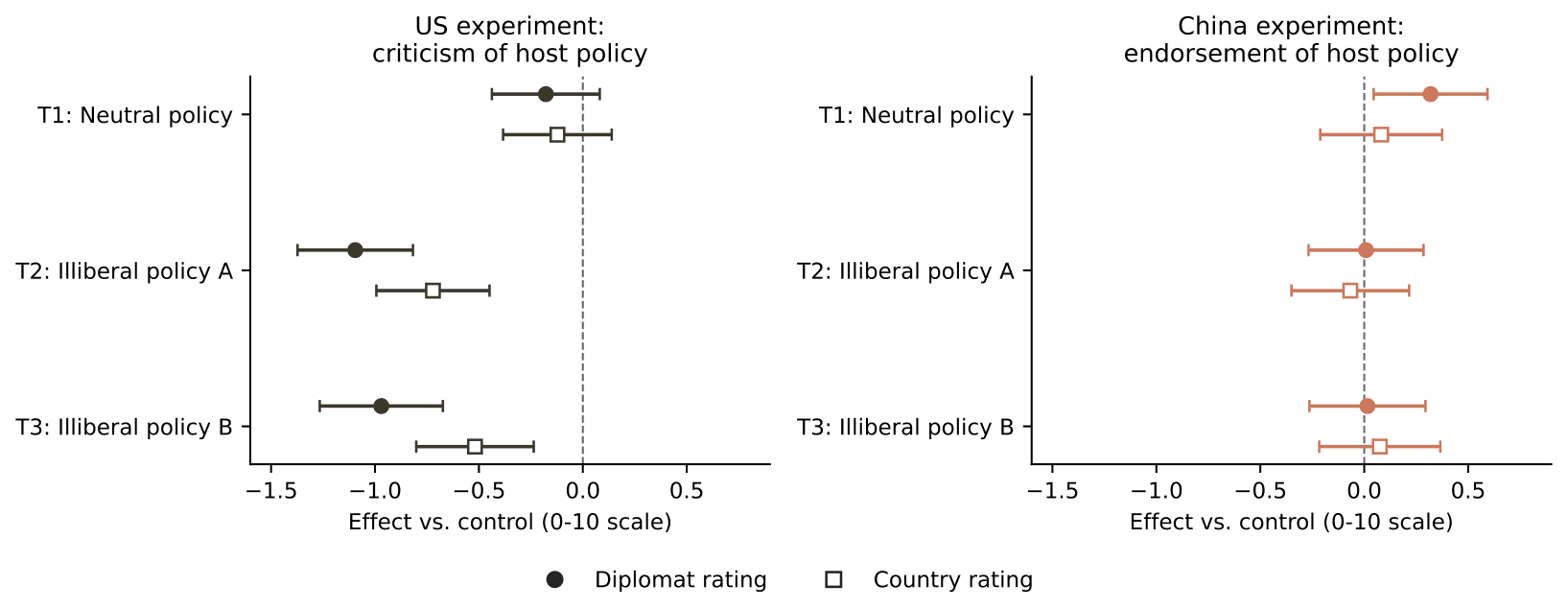
  • Clash of Ideologies: The Asymmetric Returns to US and Chinese Public Diplomacy in Southeast Asia

    Nico Ravanilla · Working paper

  • Patrons, Bosses, and Brokers: A Theory of Local Development in the Philippines' Patronage Democracy

    Nico Ravanilla · Working paper

  • The Paradox of the Right-Wing Immigrant: Moral Salience and the Single-Issue Favorability Premium among Filipino Americans

    Nico Ravanilla and Sharon Quinsaat · Working paper

  • Accountability and Compliance in Street-Level Bureaucracy

    Nico Ravanilla, Dotan Haim, and Matthew Nanes · Working paper

  • The Endurance and Erosion of Support for Mano Dura: Electoral Evidence from the War on Drugs in the Philippines

    Nico Ravanilla and Enrico La Vina · Working paper

  • Patronage Politics As Usual: How Philippine Mayors Helped Ferdinand “Bongbong” Marcos Jr. Win the 2022 Presidential Elections

    Nico Ravanilla and Minh Nam Pham · Working paper

  • How Political Connections Shape Corruption in Public Procurement

    Nico Ravanilla and Felix Hartmann · Working paper

  • The Effects of a Non-Adversarial Social Accountability Initiative on Public Works Provision: Evidence from a Large-Scale Experiment in the Philippines

    Nico Ravanilla, Eitan Paul, Allen Hicken, and Ron Mendoza · Working paper

  • Motives in Pork Distribution: Partisan Bias or Patronage?

    Nico Ravanilla · Working paper

02

Teaching & advising

At UC San Diego's School of Global Policy and Strategy:

GPPS 456

Evaluating Social Programs

2017-present

GPCO 454

Quantitative Methods II

2025-present

GPGN 490

Governance, Public Administration & Development

2016-2023

GPPS 463

Politics of Southeast Asia

2016-present

INTL 190

Political Economy of Southeast Asia

2019-2023

IRGN 490

Distributive Politics of Public Policy

2017

Students: for advising, letters, or research assistantships, the fastest way to reach me is email.

03

Policy, media & YouTube

Advisory & consulting: U.S. State Department (Bureau of Intelligence & Research) · U.S. Indo-Pacific Command · Aspen Institute (Congressional Program) · The World Bank in the Philippines · Norwegian Embassy in Manila

Public writing

AI for research & analyst careersI make videos on doing rigorous work with AI on YouTube (@nico.ravanilla).
04

Curriculum vitae

Appointments

  • Associate Professor, School of Global Policy & Strategy, UC San Diego (2023-present)
  • Assistant Professor, School of Global Policy & Strategy, UC San Diego (2016-2023)
  • Postdoctoral Fellow, Shorenstein Asia-Pacific Research Center, Stanford University (2015-2016)

Education

  • Joint Ph.D., Political Science & Public Policy, University of Michigan (2015)
  • M.A., Economics, University of Michigan, Fulbright Scholar (2010)
  • M.A. & B.S., Economics, University of the Philippines Diliman

Selected grants

  • Luce Grant, with Malesky, Pepinsky, Ostwald, Toha & Selway ($261,000, 2023)
  • National Science Foundation, with Renard Sexton ($278,439, 2020)
  • EGAP Metaketa IV Grant, with Dotan Haim & Matthew Nanes ($209,965, 2017)
  • Carnegie Corporation of New York, with Renard Sexton ($170,500, 2018)
  • Charles Koch Foundation, with Renard Sexton ($90,000, 2022)
  • J-PAL Governance Initiative Pilot Study Grant ($50,000, 2015)

Selected awards

  • Faculty Recognition Award for Excellence in Teaching, UC San Diego (2022-23)
  • APSA Southeast Asian Politics Group Best Paper Award (2019, 2023)
  • Fulbright Scholar (2008-2010)
  • Rackham Predoctoral Fellow, University of Michigan (2015)
Download full CV (PDF)

Get in touch

For research collaborations, speaking, media inquiries, or student advising.

nravanilla@ucsd.eduSchool of Global Policy and Strategy, UC San Diego