- no data
- People using generative AI
- no data
- Claude use per person
- 48
- ChatGPT messages per person, world rankOpenAI Signals, 2026-Q2
AI in Southeast Asia
Who is using AI, what governments are doing about it, and what researchers are finding, across all eleven countries in the region.
Last updated October 5, 2026
Choose a country
- 11
- countries
- 2166
- data points
- 12
- policies tracked
- 175
- studies
- 132
- commentaries
01
Who is using AI
How much of each country's population uses AI tools, according to the best available data.
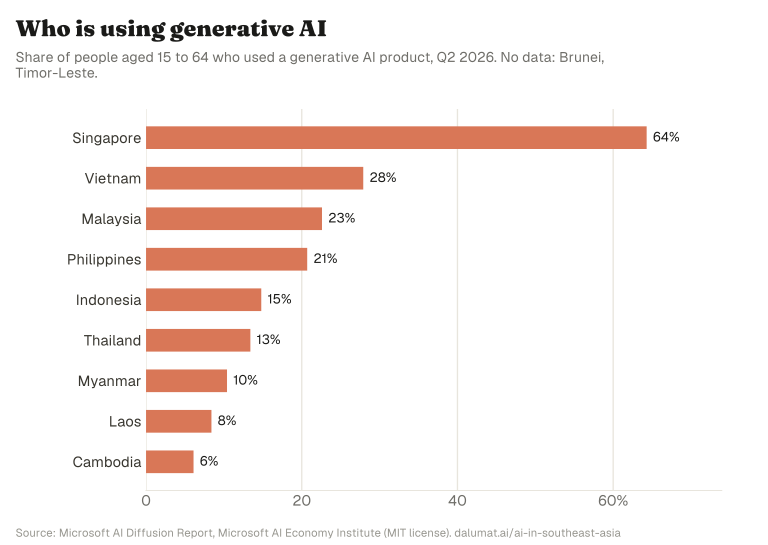
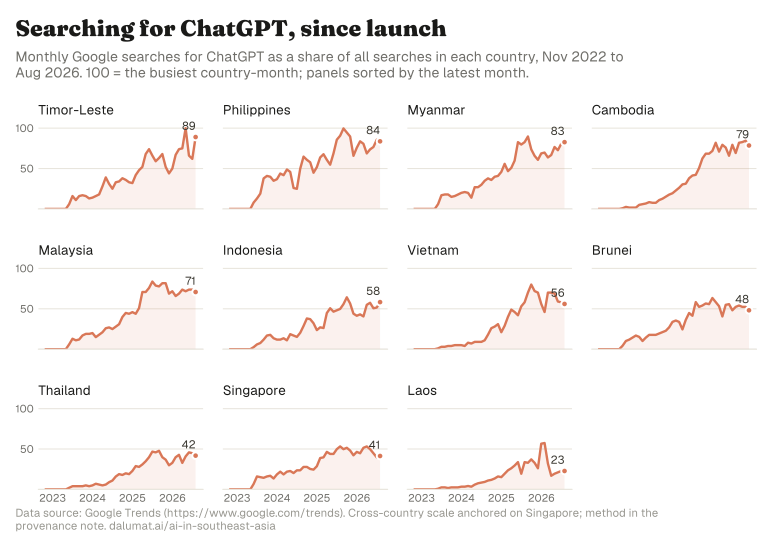
- 6.1%
- People using generative AIMicrosoft AI Diffusion Report, 2026-Q2
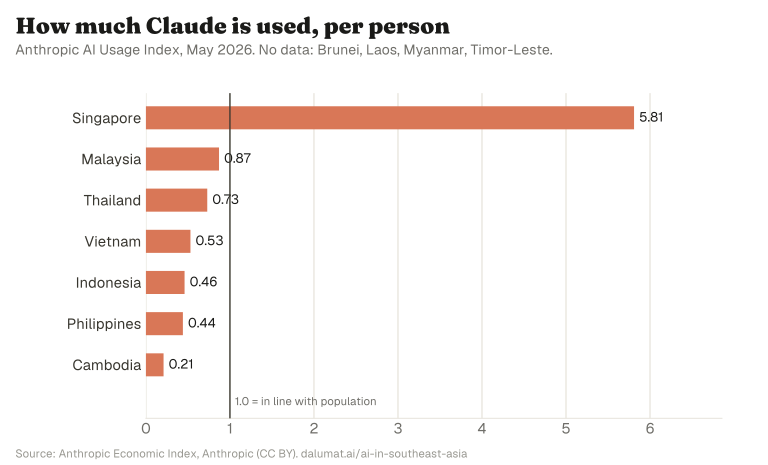
- 0.2
- Claude use per personAnthropic Economic Index, 2026-05
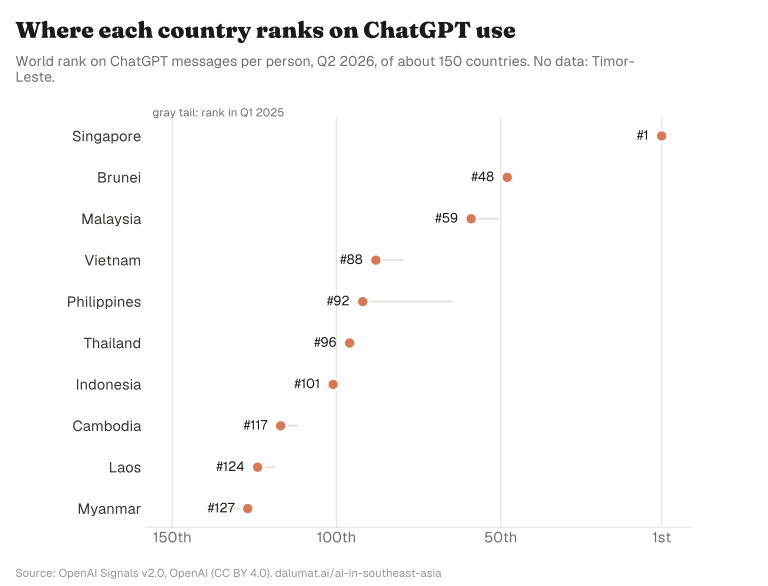
- 117
- ChatGPT messages per person, world rankOpenAI Signals, 2026-Q2
- 15%
- People using generative AIMicrosoft AI Diffusion Report, 2026-Q2
- 0.5
- Claude use per personAnthropic Economic Index, 2026-05
- 101
- ChatGPT messages per person, world rankOpenAI Signals, 2026-Q2
- 8.4%
- People using generative AIMicrosoft AI Diffusion Report, 2026-Q2
- 0.3
- Claude use per personAnthropic Economic Index, 2025-08
- 124
- ChatGPT messages per person, world rankOpenAI Signals, 2026-Q2
- 23%
- People using generative AIMicrosoft AI Diffusion Report, 2026-Q2
- 0.9
- Claude use per personAnthropic Economic Index, 2026-05
- 59
- ChatGPT messages per person, world rankOpenAI Signals, 2026-Q2
- 10%
- People using generative AIMicrosoft AI Diffusion Report, 2026-Q2
- no data
- Claude use per person
- 127
- ChatGPT messages per person, world rankOpenAI Signals, 2026-Q2
- 21%
- People using generative AIMicrosoft AI Diffusion Report, 2026-Q2
- 0.4
- Claude use per personAnthropic Economic Index, 2026-05
- 92
- ChatGPT messages per person, world rankOpenAI Signals, 2026-Q2
- 64%
- People using generative AIMicrosoft AI Diffusion Report, 2026-Q2
- 5.8
- Claude use per personAnthropic Economic Index, 2026-05
- 1
- ChatGPT messages per person, world rankOpenAI Signals, 2026-Q2
- 13%
- People using generative AIMicrosoft AI Diffusion Report, 2026-Q2
- 0.7
- Claude use per personAnthropic Economic Index, 2026-05
- 96
- ChatGPT messages per person, world rankOpenAI Signals, 2026-Q2
- no data
- People using generative AI
- no data
- Claude use per person
- no data
- ChatGPT messages per person, world rank
- 28%
- People using generative AIMicrosoft AI Diffusion Report, 2026-Q2
- 0.5
- Claude use per personAnthropic Economic Index, 2026-05
- 88
- ChatGPT messages per person, world rankOpenAI Signals, 2026-Q2
02
What governments are doing
Each country's AI strategy, laws, and regulators, with links to the official documents.
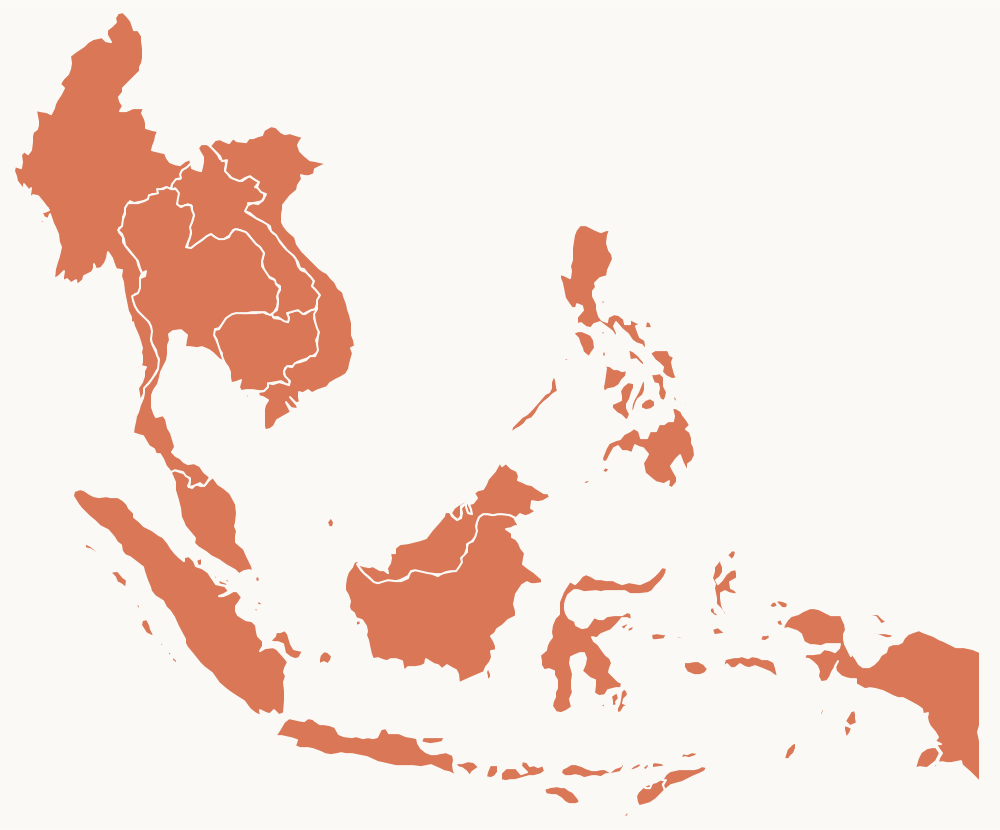
Southeast Asia
Verified September 29, 2026
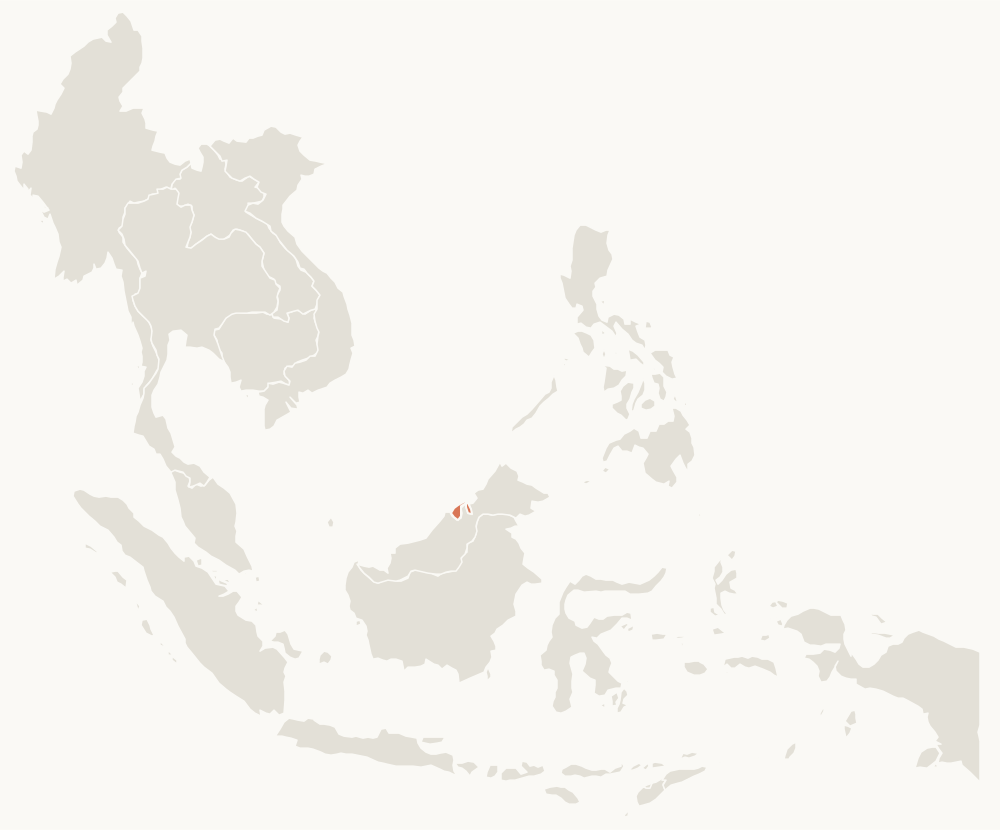
Brunei
Verified September 29, 2026
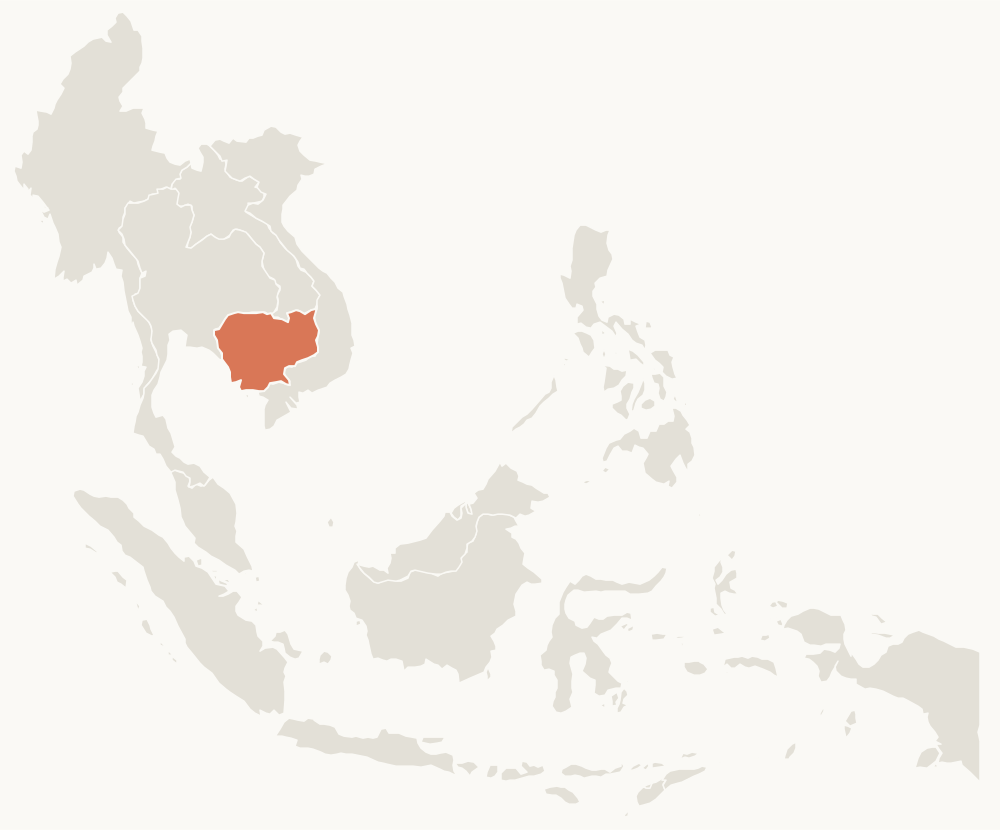
Cambodia
Verified September 29, 2026
- Strategy
- Draft National Artificial Intelligence Strategy 2025-2030Draft, 2025
- AI law
- None
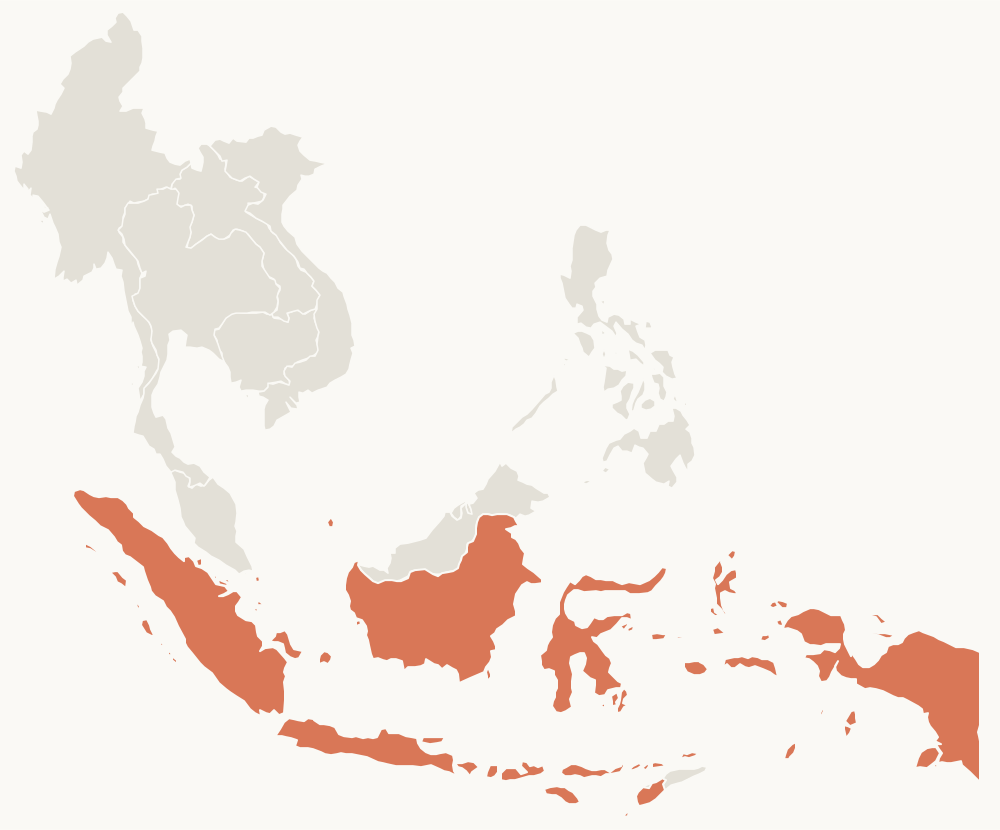
Indonesia
Verified September 29, 2026
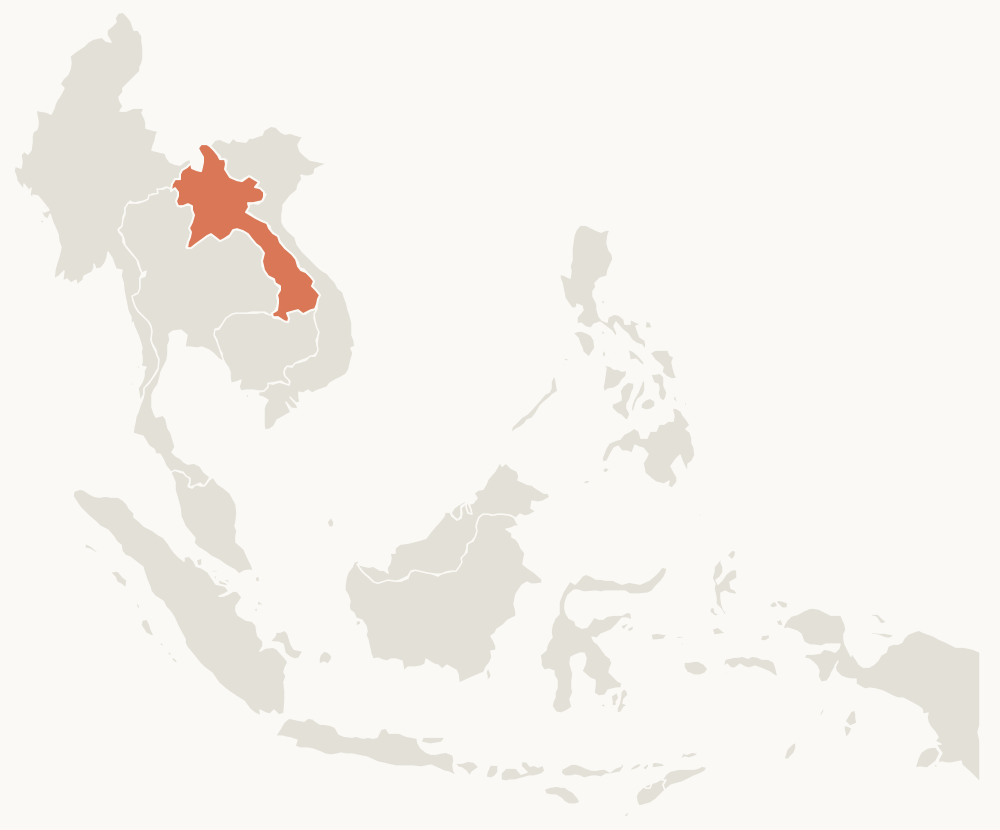
Laos
Verified September 29, 2026
- Strategy
- Draft National Strategy on Artificial Intelligence 2026-2035Draft, 2026
- AI law
- None
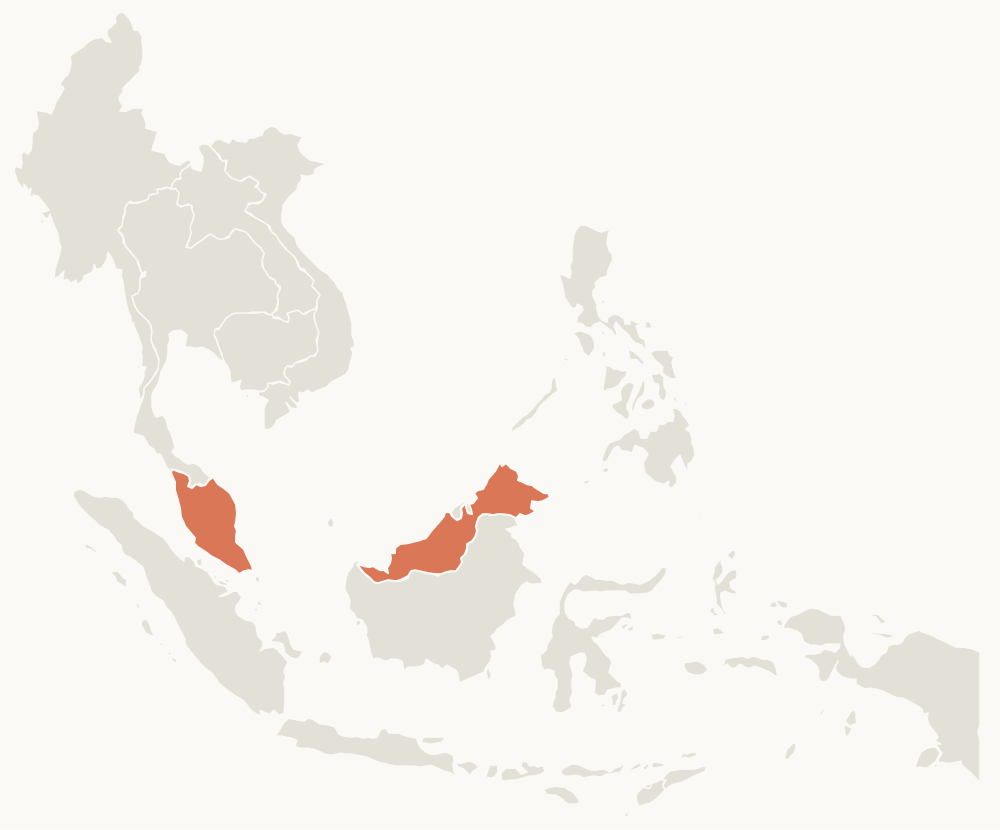
Malaysia
Verified September 29, 2026
- AI law
- Artificial Intelligence Governance Bill (Rang Undang-Undang Tadbir Urus Kecerdasan Buatan)Draft, September 10, 2026
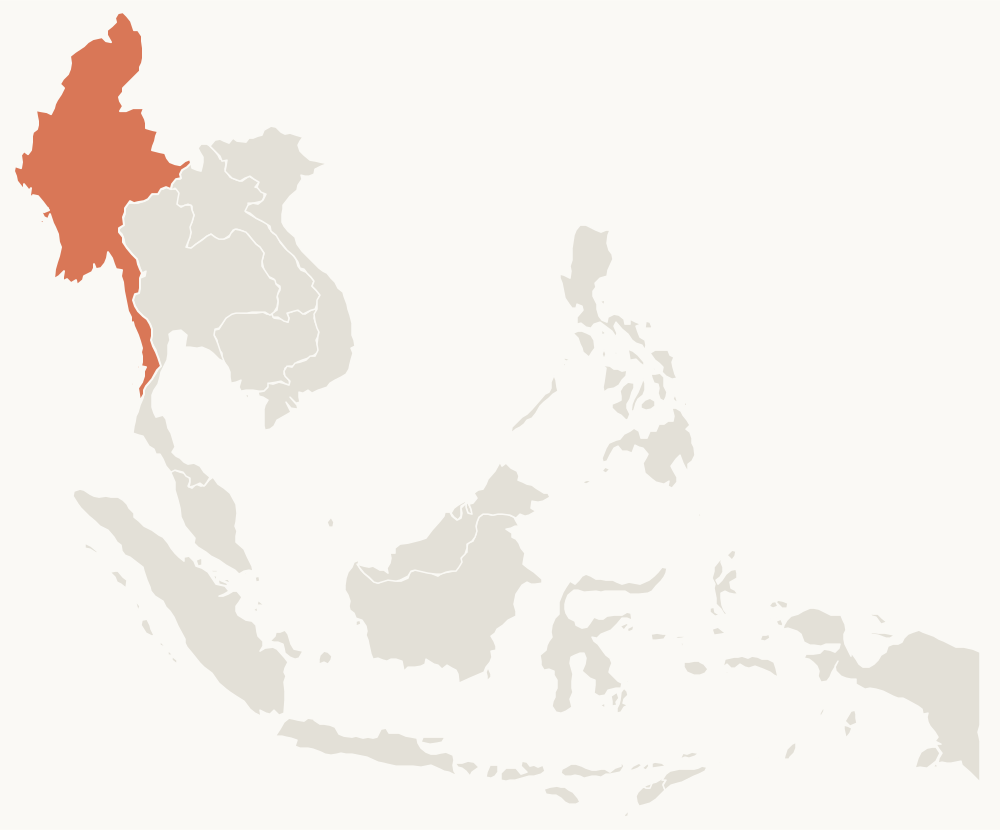
Myanmar
Verified September 29, 2026
- Strategy
- National AI Strategy (2025-2030) and National AI Policy (draft)Draft, 2025
- AI law
- None
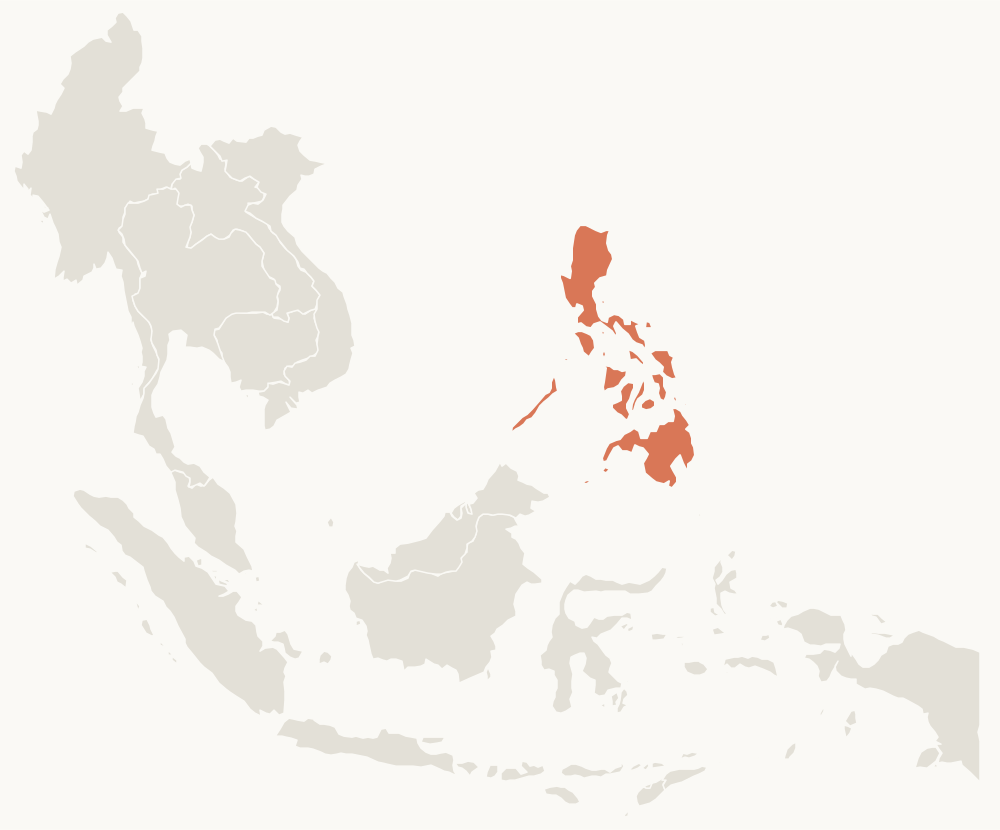
Philippines
Verified September 29, 2026
Singapore
Verified September 29, 2026
- AI law
- None
Thailand
Verified September 29, 2026
- Strategy
- Thailand National AI Strategy and Action Plan (2022-2027)July 26, 2022
- AI law
- Draft Act on Artificial Intelligence (Draft AI Act) B.E. ....Draft, August 14, 2026
Timor-Leste
Verified September 29, 2026
- Strategy
- None
- AI law
- None
Vietnam
Verified September 29, 2026
- AI law
- Law on Artificial Intelligence, No. 134/2025/QH15 (Luat Tri tue nhan tao)Enacted, December 10, 2025
03
What researchers are finding
New studies about AI in the region, summarized in plain language.
VietnamSchools and universities
Understanding dynamic learning profiles in AI-supported environments in Vietnam: Evidence from a three-wave latent transition analysis
Tracks Vietnamese undergraduates over a semester and finds three learning profiles (optimal, moderate, maladaptive) defined by AI self-efficacy, cognitive offloading and metacognition.
Preprint · September 21, 2026 · Research Square rs-10468699/v1
MalaysiaJobs and the economy
Behind Malaysia's Data Centre Boom
Explains how Johor became one of the world's largest emerging AI infrastructure clusters and the policy, geopolitical and grid problems that follow.
Report · September 1, 2026 · Trends in Southeast Asia 2026/22
PhilippinesJobs and the economy
Generative AI and Labor Displacement in the Global South: Evidence from Philippine Business Process Outsourcing
After ChatGPT's release, employment growth in Philippine BPO stalled in the provinces most exposed to generative AI while continuing elsewhere, an early sign of displacement in an outsourcing hub.
Working paper · August 1, 2026 · SSRN
ThailandHealth
From Classification to Localization and Clinical Validation: Large-Scale Development of a Deep Learning System for Thoracic Disease Detection on Chest Radiographs in Thailand
Documents the multi-year build of a Thai chest X-ray AI (Inspectra CXR) that generalizes across hospitals with AUROC near 0.97 and is rated highly usable by radiologists.
Preprint · July 10, 2026 · arXiv 2607.09305
Southeast Asia, Indonesia +6Jobs and the economy
Generative AI and labour markets in ASEAN: Significant exposure, limited disruption, uneven preparedness
Puts nearly 80 million ASEAN workers (22.9 percent of employment) in GenAI-exposed occupations yet finds no sign of broad displacement so far, with women overrepresented in the most exposed jobs and a gap between exposure and institutional readiness.
Report · July 8, 2026 · ILO Brief
Southeast Asia, Brunei +10Government and rules
AI Safety Governance, the Southeast Asian Way
Surveys AI safety and governance moves in every Southeast Asian country, including Timor-Leste, and argues the region is converging on a pragmatic, development-first model distinct from EU or US approaches.
Report · August 25, 2025 · Brookings Governance Studies report
Southeast AsiaLanguage and models
SEA-LION: Southeast Asian Languages in One Network
Introduces the SEA-LION v3 family of open LLMs continually pretrained on Southeast Asian language data and evaluated on the SEA-HELM leaderboard.
Journal article · April 8, 2025 · arXiv 2504.05747 / Accepted at IJCNLP-AACL 2025 (Main Track)
IndonesiaGovernment and rules
Election Integrity in the Age of Artificial Intelligence: Lessons from Indonesia
Reviews how campaigns and buzzers used generative AI and deepfakes in Indonesia's 2024 election and draws regulatory lessons for the region.
Report · June 25, 2024 · Fulcrum commentary
IndonesiaLanguage and models
Large Language Models Only Pass Primary School Exams in Indonesia: A Comprehensive Test on IndoMMLU
IndoMMLU collects 14,000 questions from Indonesian primary to university exams and shows that even GPT-3.5 only clears primary-school level, with especially weak local-language and culture knowledge.
Journal article · October 7, 2023 · arXiv 2310.04928 / Accepted at EMNLP 2023
04
What people are saying
Analysis and opinion from the region's writers and think tanks, summarized with a link to the original.
Southeast Asia, Singapore +3ISEAS Perspective (ISEAS-Yusof Ishak Institute)Analysis
Who Can Actually Stop the Machine? The Institutional Test for AI Governance in Southeast Asia
Aditya Vikram Kashyap · September 29, 2026
Argues that the region's growing stack of AI guides, laws and bills says little about whether any institution can actually refuse or halt a deployment, and proposes three tests: a named decision-maker, independence from commercial pressure, and technical capacity to evaluate systems. Compares Singapore's sectoral regulators, Vietnam's new law, Malaysia's proposed bill and Indonesia's pending presidential regulations and finds effectiveness still unproven in all four.
Responds to the wave of 2026 AI rule-making (Vietnam's AI law in force since March, Malaysia's AI Governance Bill, Indonesia's Perpres) by asking who holds the off switch.
ThailandFulcrumOpinion
Thailand's Passport to AI Controversy
Mathis Lohatepanont · September 28, 2026
Examines the Thai government's TH-AI Passport scheme, which promises free AI tool access to five million citizens, and argues its goals are muddled, its usage quotas too tight, and its procurement opaque. It matters because a flagship AI-adoption programme risks becoming a subsidy without measurable productivity gains.
Responds to the budget and procurement controversy around the TH-AI Passport rollout and the prime minister's AI pitch at the Shanghai World AI Conference.
MalaysiaKhazanah Research InstituteAnalysis
Why AI Is Not (Yet) Behind Malaysia's Job Losses
Mikhail Rosli · September 28, 2026
Pushes back on claims that AI drove Malaysia's 2026 retrenchment surge, the worst since 2020 and concentrated among white-collar workers in the Klang Valley, arguing that occupational AI exposure measures what is technically possible, not what firms have actually deployed. Cites thin evidence of production-scale AI use and the ATM-and-teller history, and calls for data linking firm-level adoption to worker outcomes.
Responds to public alarm over Malaysian layoffs and to the government's AI Nation 2030 messaging.
Southeast Asia, Malaysia +2FulcrumAnalysis
For Southeast Asia, the AI Race Is About Access, Not Supremacy
Zenobia Chan · September 16, 2026
Argues that the region's real stake in the US-China AI contest is reliable, affordable, locally usable access rather than frontier capability, and maps dependencies across chips, cloud, power and language coverage. Recommends hedging and diversification to secure what the author calls resilient access.
Adapted from an ISEAS Trends in Southeast Asia paper; sits alongside the Pax Silica vs WAICO pressure on regional governments.
IndonesiaThe Jakarta PostAnalysis, paywalled
AI boom: Can Indonesia move from market to maker?
Abdurohman · September 1, 2026
Prompted by CoreWeave's plan for three Indonesian data centres, the author warns that a country importing chips and cloud services without tech exports will see AI widen its trade deficit. He calls for a policy pivot into tech manufacturing and infrastructure so Indonesia captures value rather than just demand.
Connects to the hyperscaler build-out across Java and the regional race with Malaysia and Singapore.
PhilippinesRest of WorldOpinion
Growth without work: The human cost of the AI revolution
Jibu Elias · August 5, 2026
Argues that AI is automating cognitive work fastest in the Global South, where workers have least access to augmentation, producing economic growth that bypasses employment. Uses displaced Filipino transcriptionists and call-centre staff as the leading example of the pattern.
Connects to the BPO sector's exposure to generative AI and the Philippine Magna Carta for BPO Workers debate.
05
Who to follow
The people who write regularly about AI in the region, and where to read them.
Thailand
Mathis (Ken) Lohatepanont
PhD candidate, University of Michigan; contributor to Fulcrum
Thai politics and policy, including the government's AI plans and the TH-AI Passport debate.
Malaysia, Southeast Asia
Phar Kim Beng
Professor of ASEAN Studies, International Islamic University Malaysia
ASEAN's position between the US and Chinese AI ecosystems, AI security, and how the region should regulate risk.
Indonesia, Southeast Asia
Tuhu Nugraha
Principal, Indonesia Applied Digital Economy and Regulatory Network
The political economy of AI in the Global South, written from Jakarta almost every week.
Southeast Asia
Seth Hays
Digital Governance Asia
A monthly newsletter tracking AI policy consultations and rules across Asia, Southeast Asia included.
Malaysia, Indonesia, Southeast Asia
Nuurrianti Jalli
Oklahoma State University; contributor to Fulcrum
AI in elections, deepfakes, and how social platforms handle AI-driven abuse.
06
Countries
Everything on this site, one country at a time.