- 64%
- People using generative AIMicrosoft AI Diffusion Report, 2026-Q2
- 5.8
- Claude use per personAnthropic Economic Index, 2026-05
- 1
- ChatGPT messages per person, world rankOpenAI Signals, 2026-Q2
01
Who is using AI
02
What governments are doing
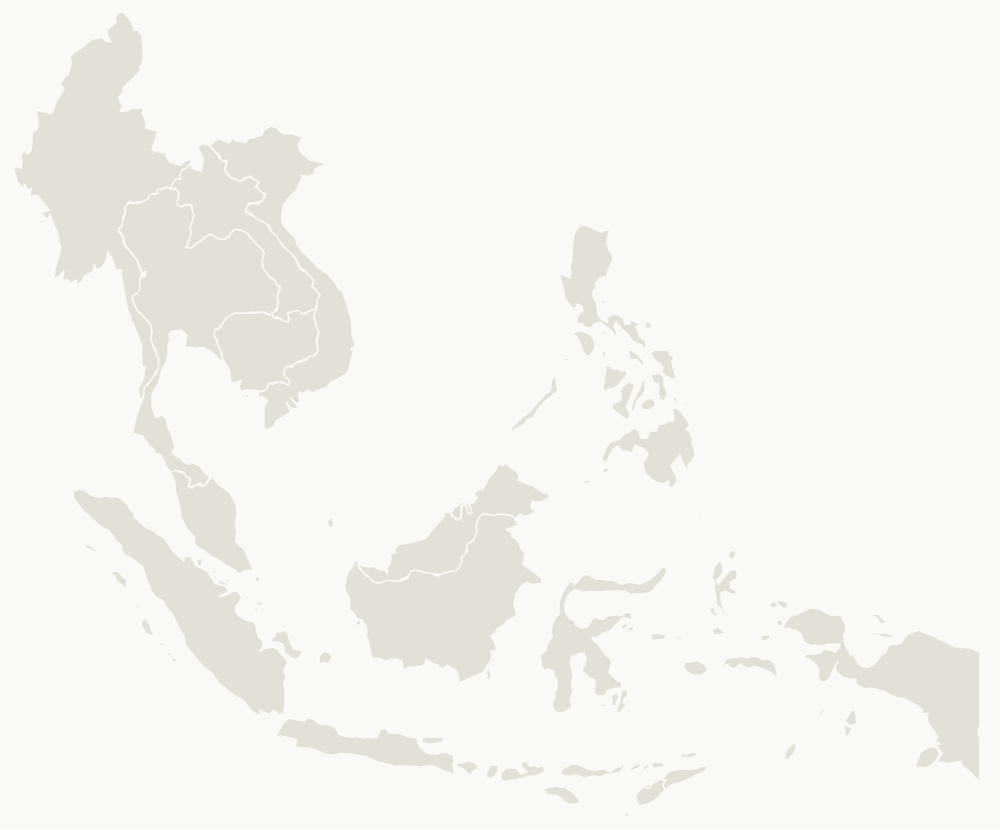
Singapore
Verified September 29, 2026
- AI law
- None
- Data law
- Personal Data Protection Act 2012 (Act 26 of 2012), amended by the Personal Data Protection (Amendment) Act 2020 (Act 40 of 2020)Enacted, 2012
- Sector rules
- FEAT Principles (2018-11-12), Veritas initiative (2019 onward), Project MindForge AI Risk Management Toolkit (2026-03-20), and proposed Guidelines on AI Risk Management (consulted 2025-11-13 to 2026-01-31)2026MAS moved from principles-based FEAT guidance and the Veritas toolkit toward supervisory expectations: a consultation on binding-style Guidelines on AI Risk Management for all financial institutions closed 2026-01-31 (not yet finalised as of 2026-09-29), and an industry Operationalisation Handbook covering traditional, generative and agentic AI was published 2026-03-20.
- Artificial Intelligence in Healthcare Guidelines (AIHGle) 2.02026Non-binding guidance, first issued in 2021 and reissued as AIHGle 2.0 in 2026, that clarifies developer, deployer and clinical-user responsibilities, transparency expectations and risk assessment for AI used in care; regulated AI medical devices remain subject to HSA's Health Products Act regime.
- Elections (Integrity of Online Advertising) (Amendment) Act 2024 (deepfakes of candidates)2024Binding law introduced 2024-09-09 and passed 2024-10-15 that bans publishing, sharing or boosting digitally generated or manipulated online election advertising depicting a candidate saying or doing something they did not, empowers the Returning Officer to issue corrective directions, and penalises non-compliance; trackers report commencement on 2025-01-22 ahead of the 2025 general election.
- Online Safety (Miscellaneous Amendments) Act 2022 (in force 2023-02-01) and Online Safety (Relief and Accountability) Act 2025 (Act 23 of 2025, passed 2025-11-05, first phase in force 2026-06-29 with the Online Safety Commission)2026Binding platform-regulation laws that are not AI-specific but govern synthetic and manipulated content: the 2022 Act lets IMDA direct social media services to block egregious content and imposes a Code of Practice for Online Safety, while the 2025 Act creates a Commissioner of Online Safety who can order removal of harmful content (initially intimate-image abuse, child abuse imagery, doxxing, harassment and stalking) and new statutory torts against posters, administrators and platforms.
Posture: Singapore is a deliberate no-horizontal-law jurisdiction that governs AI through iterated voluntary frameworks, testing tools and targeted binding rules on specific harms. Name variants: NAIS 2.0 is also written 'National AI Strategy 2.0'; the Model AI Governance Framework is commonly abbreviated MGF or 'Model Framework'; the agentic edition is cited as 'MGF for Agentic AI' and is version 1.5 as of 2026-06-05, so editors should check for a later version. The Ministry of Communications and Information was renamed MDDI in July 2024, so pre-2024 documents carry the old ministry name. The Singapore AI Safety Institute is the Digital Trust Centre at NTU, designated in 2024, not a new statutory body; a 2026-02 MDDI release on Paris summit initiatives and the sgaisi.sg site confirm its role but I did not find a primary page giving the designation date. The MAS Guidelines on AI Risk Management are still a consultation draft; if finalised they would be the first supervisory AI rules with quasi-binding force. AIHGle 2.0: MOH's page says it updates the 2021 guidelines and is a 2026 release; the exact publication date was not visible. The National Day Rally 2026 (2026-08-23) contains no announcement of AI legislation; the Tech Times headline claiming Singapore 'abandons voluntary AI governance' overstates the speech, which promises safeguards and coalitions on AI and binding age checks for social media. Also relevant but not rows: PDPC AI advisory guidelines (2024-03-01), the Global AI Assurance Pilot (2025-02-11), a planned AI tester accreditation programme (reported for Q3 2026, unverified at source), and IMDA's IAPP partnership (2026-07-22, from secondary sources). All dates ISO; Singapore official documents are in English so no translation issues.
03
What researchers are finding
SingaporeSociety and elections
Chatbot Engagement Does Not Always Beget Metalearning: Evidence from Three Countries
Finds that a fact-checking chatbot helped people in Singapore, India and the US spot fake image claims on the spot, but the benefit had vanished a week later, falling most in Singapore and India.
Preprint · September 26, 2026 · arXiv 2609.32739
SingaporeSchools and universities
Automated grading of short-answer image-based assessments using a hybrid natural language processing-AI framework: validation in radiology education
Finds that an automated marker for Singapore radiology trainees agreed with human graders on 97.5 percent of short answers, though disagreement grew as answers got longer.
Journal article · September 25, 2026 · Singapore Medical Journal
SingaporeJobs and the economy
Measuring Firm-Level Artificial Intelligence Use and its Effects on Firm Performance and Employment in Singapore
Finds that Singapore firms adopting AI grow revenue and headcount, with gains rising as AI capabilities deepen, but show no measurable productivity or profit improvement within four years of first adoption.
Report · August 11, 2026 · Economic Survey of Singapore 2Q 2026 feature article
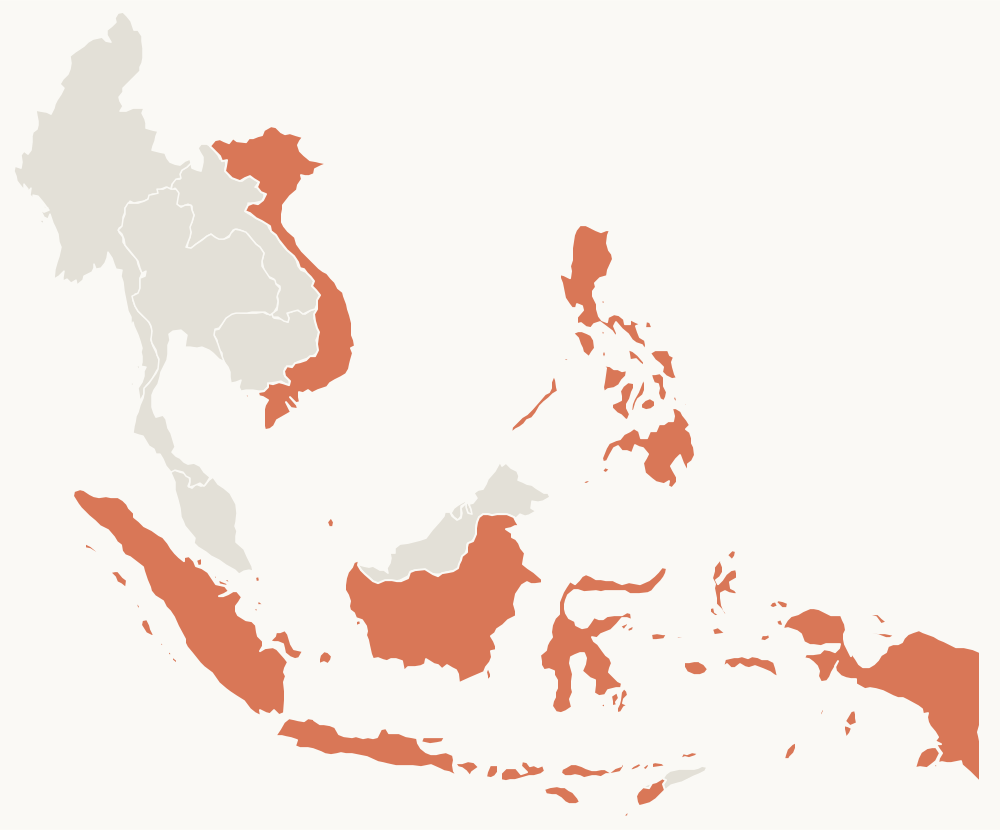 Indonesia, Philippines +2
Schools and universities
Bridging the Divide: An ASEAN Fintech Skills Framework for Indonesia, the Philippines, Singapore, and Viet Nam
Finds roughly 48 percent technical and 46 percent soft-skills gaps in the fintech workforce of four ASEAN economies, with AI and cybersecurity among the scarcest capabilities, and proposes a regional skills framework.
Report · August 1, 2026 · ADB report
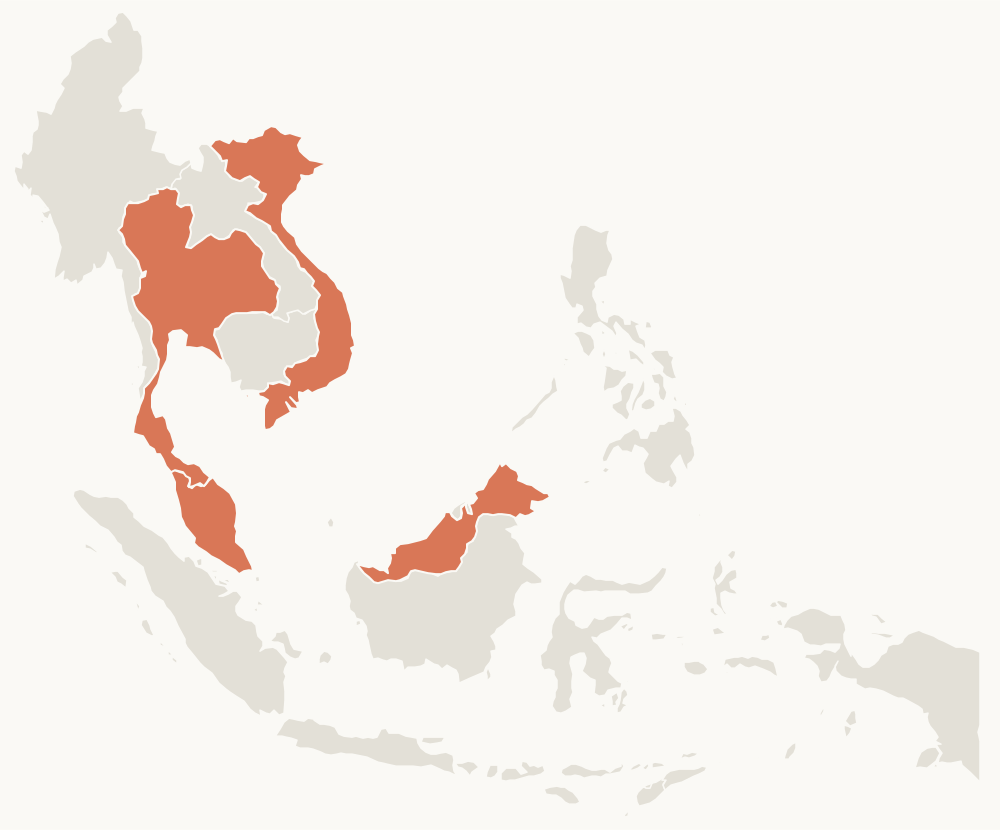 Singapore, Malaysia +2
Government and rules
Governing for Adoption: The Role of Legal and Regulatory Frameworks in Shaping AI Uptake in Southeast Asia
Compares four ASEAN legal regimes to show how sandboxes, data-sharing rules and AI assurance mechanisms, not tax incentives, drive AI commercialisation and adoption.
Journal article · July 31, 2026 · IntechOpen (perspective chapter)
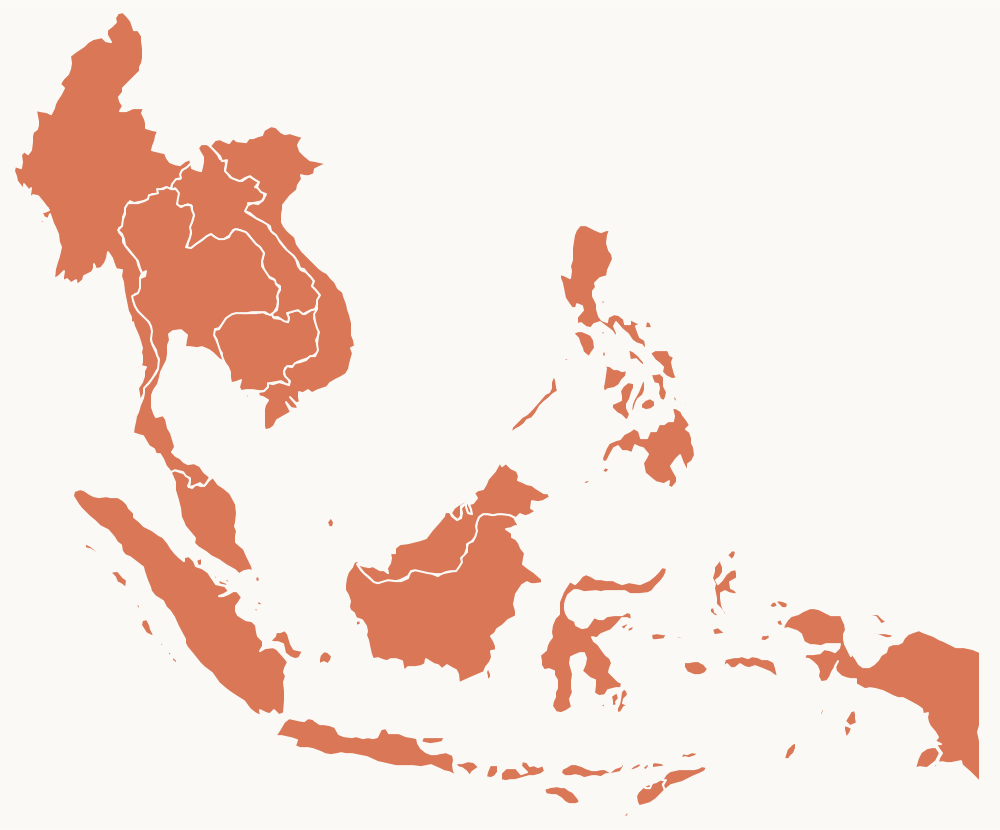 Southeast Asia, Indonesia +6
Jobs and the economy
Generative AI and labour markets in ASEAN: Significant exposure, limited disruption, uneven preparedness
Puts nearly 80 million ASEAN workers (22.9 percent of employment) in GenAI-exposed occupations yet finds no sign of broad displacement so far, with women overrepresented in the most exposed jobs and a gap between exposure and institutional readiness.
Report · July 8, 2026 · ILO Brief
SingaporeGovernment and rules
Ethical Engagement and Public Support for AI Governance in Singapore
Shows that people who engage with AI ethics questions use AI more and support its governance more, while an age, education and gender divide shapes who engages at all.
Report · May 1, 2026 · RSIS Policy Report
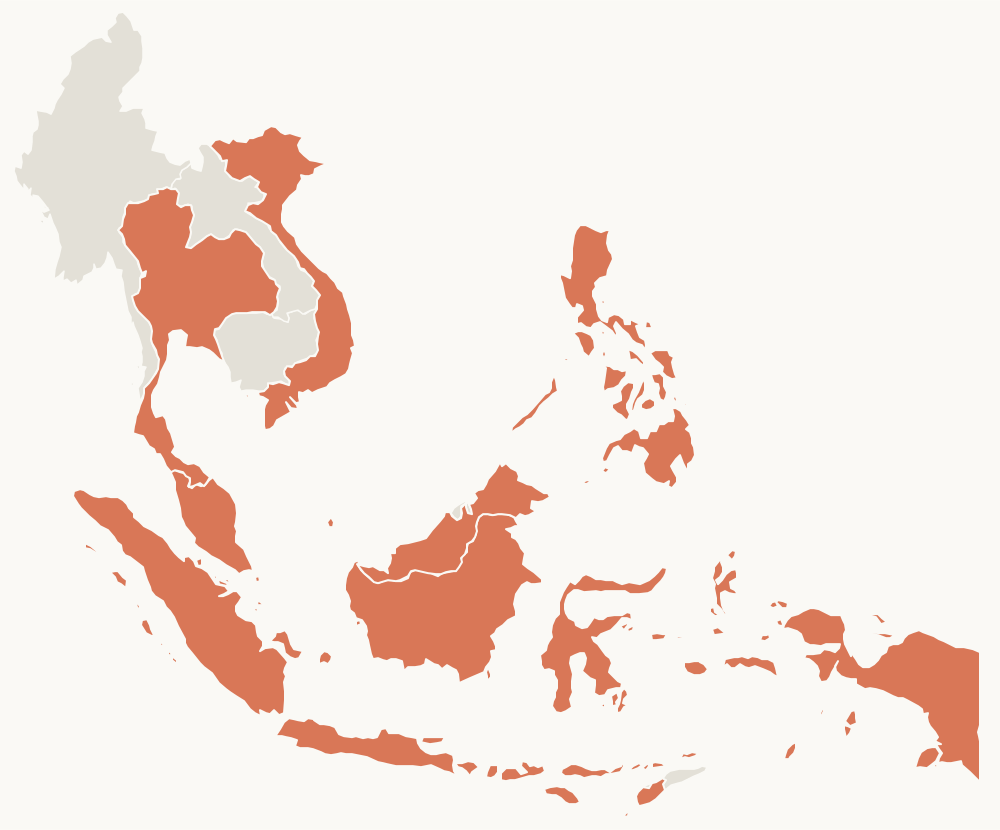 Indonesia, Malaysia +4
Government and rules
The Evolution of Tech Governance in Southeast Asia-6, Third Edition
Tracks how SEA-6 digital governance shifted from AI ethics principles toward binding rules, sovereign compute investment and safety-testing regimes during 2025.
Report · March 4, 2026 · TFGI annual report
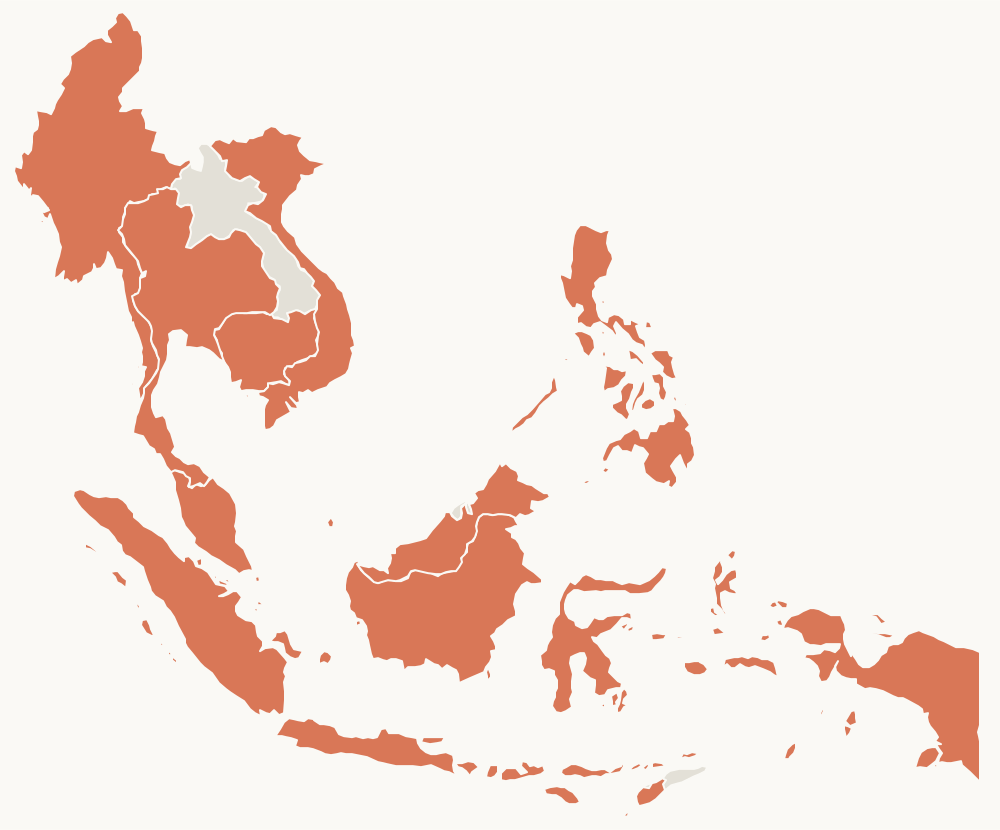 Cambodia, Indonesia +6
Government and rules
The Annual Report: Digital Rights in Southeast Asia 2025
Regional digital-rights review that includes AI-enabled surveillance (notably Myanmar's PSMS) and platform accountability across eight countries.
Report · February 16, 2026 · DigitalReach annual report
SingaporeSchools and universities
Unified AI Literacy Framework for Singapore
Proposes a single national AI literacy framework for Singapore that consolidates existing competency models across schools, workplaces and the public.
Working paper · February 1, 2026 · IPS Working Papers No. 71
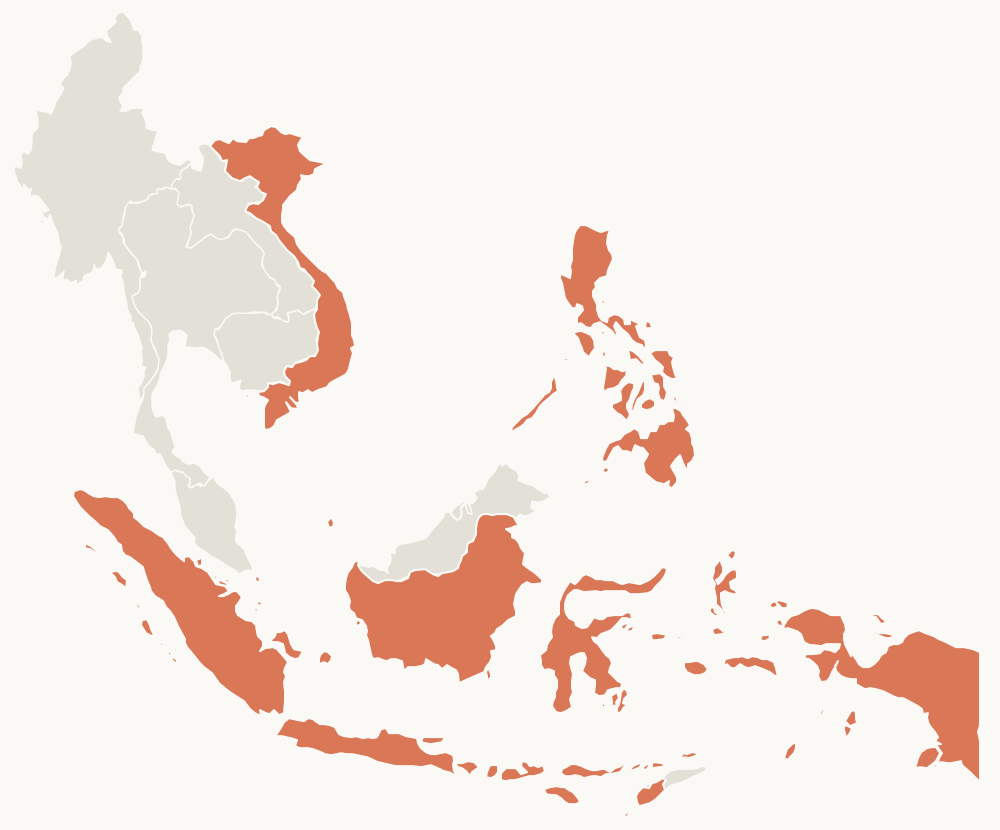 Indonesia, Philippines +2
Jobs and the economy
Workers' Exposure to Artificial Intelligence Across Development Stages
Builds development-stage-adjusted AI exposure measures and shows workers in lower-income Asian economies, including Indonesia and the Philippines, are less exposed than those in rich countries mainly because tasks within the same occupation differ.
Working paper · January 1, 2026 · ADB Economics Working Paper No. 836
SingaporeGovernment and rules
Trust as a Strategic Asset: AI and Domestic Confidence in Singapore amid US-China Dynamics
Finds Singaporeans broadly back AI use, R&D and regulation and trust local institutions (government, universities, the military) to oversee it far more than the US, China or international bodies.
Report · November 21, 2025 · RSIS Policy Report
Southeast Asia, Indonesia +5Government and rules
Policy Brief: Promoting Regional Cooperation for Responsible Artificial Intelligence (AI) Deployment
Sorts the SEA-6 into principle-led, hard-law and ecosystem-building approaches to AI governance and proposes four regional coordination priorities.
Report · November 1, 2025 · TFGI Policy Brief
SingaporeHealth
Large language model as clinical decision support system augments medication safety in 16 clinical specialties
In Singapore hospital vignettes, a pharmacist-plus-LLM co-pilot caught substantially more drug-related problems than pharmacists alone, especially serious-harm errors.
Journal article · September 24, 2025 · Cell Reports Medicine (PMC12629785); earlier version arXiv 2402.01741
SingaporeLanguage and models
Toxicity Red-Teaming: Benchmarking LLM Safety in Singapore's Low-Resource Languages
SGToxicGuard benchmarks how easily LLMs produce toxic content in Singapore's low-resource languages through conversation, QA and content-composition attacks.
Journal article · September 18, 2025 · arXiv 2509.15260 / 9 pages, EMNLP 2025
SingaporeSociety and elections
Navigating Public Opinion on AI in Singapore: Awareness, Perceptions and Vulnerabilities
Survey shows ChatGPT is the most used tool, education the most common use, and finds an emerging AI divide plus public worries about harm and ethics.
Report · September 1, 2025 · RSIS Policy Report
Southeast Asia, Brunei +10Government and rules
AI Safety Governance, the Southeast Asian Way
Surveys AI safety and governance moves in every Southeast Asian country, including Timor-Leste, and argues the region is converging on a pragmatic, development-first model distinct from EU or US approaches.
Report · August 25, 2025 · Brookings Governance Studies report
SingaporeLanguage and models
Lost in Localization: Building RabakBench with Human-in-the-Loop Validation to Measure Multilingual Safety Gaps
RabakBench localizes a safety benchmark to Singlish, Chinese, Malay and Tamil via LLM-driven red-teaming and human validation, exposing gaps in commercial guardrails.
Preprint · July 8, 2025 · arXiv 2507.05980
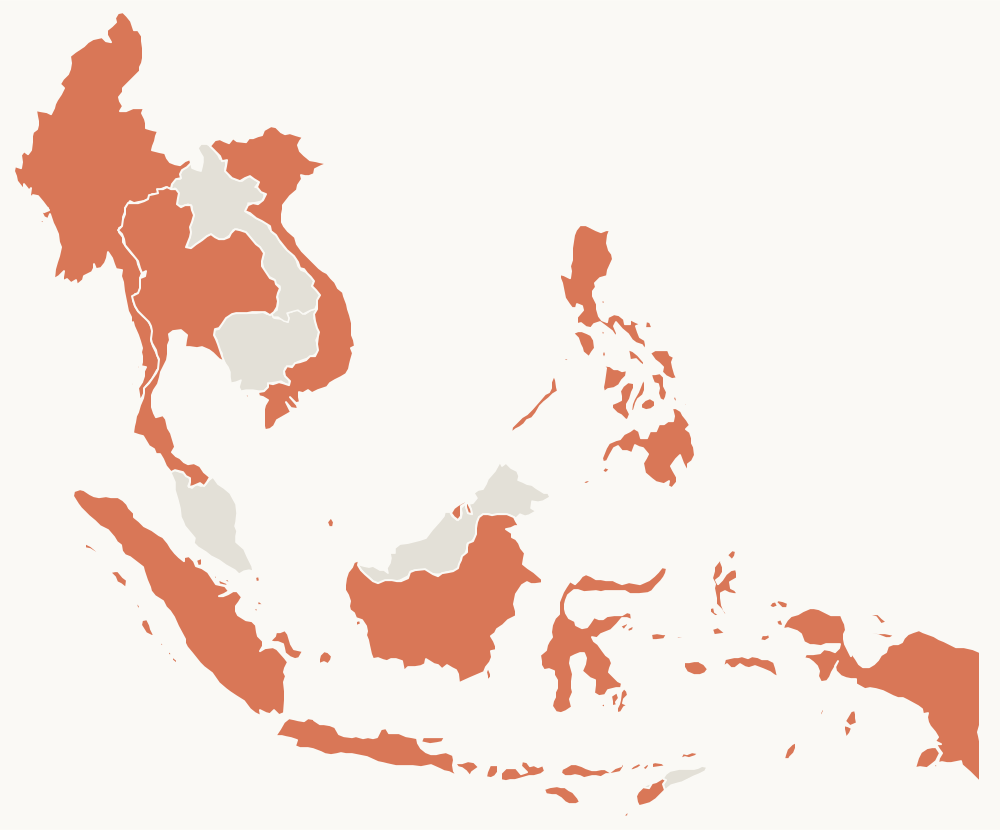 Brunei, Indonesia +5
Health
Insights Into the Current and Future State of AI Adoption Within Health Systems in Southeast Asia: Cross-Sectional Qualitative Study
Stakeholders across seven SEA health systems say AI uptake hinges on basic digital infrastructure and data/technology governance, with a sharp readiness gap between high-income and lower-middle-income members.
Journal article · June 16, 2025 · Journal of Medical Internet Research 27:e71591 (doi 10.2196/71591)
Southeast Asia, Singapore +4Health
Artificial intelligence utilization in cancer screening program across ASEAN: a scoping review
Maps the thin but growing evidence base on AI-assisted cancer screening in ASEAN, finding most studies concentrated in a few countries and only half reaching prospective clinical evaluation.
Journal article · April 15, 2025 · BMC Cancer (PMC12001681)
SingaporeSociety and elections
AI-Enabled Organisational Listening: Leveraging Artificial Intelligence for a More Relational Approach to Government Communication
Argues Singapore's government can use AI to listen to citizens at scale and shift public communication from broadcasting to a relational model.
Working paper · March 1, 2025 · IPS Working Papers No. 61
SingaporeLanguage and models
Safe at the Margins: A General Approach to Safety Alignment in Low-Resource English Languages -- A Singlish Case Study
Compares alignment methods for reducing toxicity in Singlish and proposes a KTO variant that generalizes safety to a low-resource English variety.
Preprint · February 18, 2025 · arXiv 2502.12485
SingaporeJobs and the economy
Measuring the Impact of AI and Large Language Models on Singapore's Labor Market: Constructing a Task-Level Exposure Index
Builds a Singapore-specific AI and LLM exposure index from task descriptions and job-posting data to measure how AI is changing labour demand across occupations.
Working paper · January 1, 2025 · SMU ResWORK research project
Southeast Asia, Singapore +5Government and rules
Policy State of Play: Artificial Intelligence in Southeast Asia
Maps national AI policies across six ASEAN economies and characterises the region's light-touch regulatory stance against its capacity gaps.
Report · August 21, 2024 · SEAPPI report
SingaporeJobs and the economy
Impact of AI on Singapore's Labor Market
Finds Singapore is among the most AI-exposed economies but also among the best prepared, with clerical, administrative and sales roles facing the largest displacement risk and upskilling as the main policy lever.
Working paper · August 13, 2024 · IMF Selected Issues Paper SIP/2024/040
SingaporeGovernment and rules
Safeguarding Elections from Threats Posed by Artificial Intelligence
Reviews deepfake and AI disinformation threats to elections and what Singapore can adopt from other jurisdictions' safeguards.
Working paper · August 1, 2024 · IPS Working Papers No. 56
SingaporeHealth
Machine Learning Models for Dengue Forecasting in Singapore
Benchmarks classical and deep models on Singapore's weekly dengue counts and finds CNN-based forecasts had the lowest error for 2019.
Preprint · June 29, 2024 · arXiv 2407.00332
Southeast Asia, Malaysia +5Government and rules
The Plight of Platform Workers Under Algorithmic Management in Southeast Asia
Shows how Grab and GoTo's algorithmic management isolates ride-hailing and delivery workers, blurs employer responsibility and concentrates platform power across the region.
Report · April 30, 2024 · Carnegie Endowment research
Singapore, Southeast AsiaLanguage and models
SeaEval for Multilingual Foundation Models: From Cross-Lingual Alignment to Cultural Reasoning
SeaEval evaluates foundation models on both standard NLP tasks and Singapore- and Southeast-Asia-centred cultural reasoning, finding brittleness to paraphrase and inconsistency across languages.
Journal article · September 9, 2023 · arXiv 2309.04766 / Published at NAACL 2024
SingaporeGovernment and rules
Regulating Artificial Intelligence: Maximising Benefits and Minimising Harms
Surveys regulatory options for AI harms and positions Singapore's voluntary, framework-based approach against emerging hard-law regimes.
Working paper · August 1, 2023 · IPS Working Papers No. 52
04
What people are saying
Southeast Asia, Singapore +3FulcrumAnalysis
Southeast Asia's Mixed AI Stacks: Pragmatic but Not Risk-Free
Zenobia Chan · September 30, 2026
Shows that regional projects such as SEA-LION, Sahabat-AI, Typhoon and FPT's AI Factory combine American chips, American and Chinese open-weight models and local data rather than picking one bloc. Argues these mixed stacks bring real gains in local relevance and testing capacity, but warns that labels like sovereign can overstate control when every model still runs on the same foreign cloud or chips.
Adapted from her ISEAS Trends in Southeast Asia paper, and written as Washington signals that partners may have to choose between US and Chinese AI coalitions.
SingaporeSingapore Ministry of Digital Development and InformationOfficial statement
SMS Tan Kiat How's Keynote Address at the Asia New Vision Forum Innovation 2026
Tan Kiat How · September 30, 2026
Tells founders and investors, many of them from China, that for most companies the race that matters is turning AI into dependable business value rather than building the most capable model. Names conversion, assurance and interoperability as the capabilities Singapore will offer, pitching the country as a place where firms can prove and scale AI products across markets.
Given after the Trump and Xi meeting agreed to open a US-China dialogue on AI, and aimed at Chinese firms looking to expand abroad.
Singapore, Southeast AsiaEast Asia ForumOpinion
Asia's middle powers shouldn't waste money on an AI race they won't win
William B Smith · September 29, 2026
Argues that subsidising home-grown frontier foundation models is a losing bet for mid-sized Asian economies because training costs compound and models depreciate fast, and holds up Singapore's low-budget fine-tuned SEA-LION as the sensible alternative. Recommends directing public money to durable strengths such as chips and robotics.
Responds to the sovereign-model programmes in Korea, India and Japan and to US export controls on frontier models imposed in June 2026.
Southeast Asia, Malaysia +4The DiplomatAnalysis
The Global Data Center Boom Has Arrived in Southeast Asia
James Guild · September 29, 2026
Surveys the capital pouring into regional data centres, with Malaysia and the Johor-Singapore zone in front, and asks whether local demand for AI services will ever justify the land, power and water being committed. Frames the boom as a bet whose downside the host countries would carry.
Connects to Malaysian FDI data and the wider debate over whether Southeast Asia is host or beneficiary of the AI build-out.
Southeast Asia, Singapore +3ISEAS Perspective (ISEAS-Yusof Ishak Institute)Analysis
Who Can Actually Stop the Machine? The Institutional Test for AI Governance in Southeast Asia
Aditya Vikram Kashyap · September 29, 2026
Argues that the region's growing stack of AI guides, laws and bills says little about whether any institution can actually refuse or halt a deployment, and proposes three tests: a named decision-maker, independence from commercial pressure, and technical capacity to evaluate systems. Compares Singapore's sectoral regulators, Vietnam's new law, Malaysia's proposed bill and Indonesia's pending presidential regulations and finds effectiveness still unproven in all four.
Responds to the wave of 2026 AI rule-making (Vietnam's AI law in force since March, Malaysia's AI Governance Bill, Indonesia's Perpres) by asking who holds the off switch.
SingaporeSingapore Ministry of Digital Development and InformationOfficial statement
Opening Address by SMS Tan Kiat How at Tech Week Singapore
Tan Kiat How · September 29, 2026
Argues that the next AI infrastructure challenge is not only more compute but the layers around it: shared platforms that let hospitals and firms deploy AI without rebuilding the basics, and safeguards that make agents trustworthy. Says limits on land, energy and water mean Singapore must make every unit of infrastructure work harder, and previews a Digital Infrastructure Bill on the resilience and sustainability of clouds and data centres.
Delivered a week before the Digital Infrastructure Bill was due in Parliament, and part of the September run of ministerial speeches on Singapore's AI direction.
SingaporeSingapore Ministry of Digital Development and InformationOfficial statement
Opening Address by SMS Tan Kiat How at UOB FinLab AI Ready Changemakers Summit
Tan Kiat How · September 28, 2026
Tells SMEs, which make up 99 percent of Singapore firms and seven in ten jobs, to start from a real business problem rather than adopt AI for its own sake, to involve staff from the outset, and to keep safeguards on security, data and human accountability. Argues Singapore's opportunity lies in thoughtful adoption across SMEs rather than in building frontier models, and that AI makes expertise more valuable, not less.
Part of a September cluster of ministerial speeches steering Singapore's AI narrative toward adoption and workforce reassurance.
Southeast Asia, Malaysia +5The Southeast Asia Desk (Substack)Analysis
The cost of the cloud: Inside Southeast Asia's $30B data centre trilemma
Fredrick Samuel Haryanto and Alvin Qobulsyah · September 28, 2026
Frames the region's AI data-centre rush as a trilemma of power grids, water depletion and community consent, using the Johor protests as the warning case. The explainer argues the build-out will not stop, so the region must decide who bears its costs.
Published as the Jakarta-based newsletter's weekly 'Regional Line' feature.
SingaporeSingapore Ministry of Digital Development and InformationOfficial statement
Opening Address by SMS Tan Kiat How at the National Translation Committee Conference 2026: Reimagining Translation in the Age of AI
Tan Kiat How · September 26, 2026
Argues AI can process language but not Singapore's context, so machine translation should augment rather than replace human translators. Announces SG Translate 2.0 tuned to local usage, calls for the translation profession to evolve around expert judgment, and enlists community participation to protect multilingual identity.
Speaks to the multilingual-LLM debate in Southeast Asia and worries about translator job losses.
SingaporeSingapore Ministry of Digital Development and InformationOfficial statement
Opening Address by MOS Rahayu Mahzam at IntelligenceX 2026: The Global Quantum x AI Frontier
Rahayu Mahzam · September 24, 2026
Says that as AI grows more capable people must remain in control, and that Singapore will pursue mission-driven AI in manufacturing, finance, healthcare and connectivity rather than isolated experiments. Ties safety to international cooperation on frontier AI governance and to an ecosystem linking researchers, industry and government.
Opening of an inaugural NUS conference on the quantum-AI intersection.
SingaporeSingapore Ministry of Digital Development and InformationOfficial statement
Address by SMS Tan Kiat How at NVIDIA AI Day Singapore
Tan Kiat How · September 23, 2026
Argues the AI bottleneck has moved from compute and models to commercialisation: firms must redesign workflows around human-AI collaboration and tie spending to measurable productivity or revenue. Casts Singapore as a lead market where frontier technology meets demanding users, with physical AI and robotics answering its labour and land constraints.
Speech at a chip vendor's showcase, part of Singapore's push to convert AI infrastructure investment into adoption.
SingaporeThe Straits TimesOpinion, paywalled
A normie's guide to understanding the global AI safety debate
Bhavan Jaipragas · September 23, 2026
ST's deputy opinion editor tries to translate the jargon-heavy global AI safety argument (p(doom), recursive self-improvement, pacing the frontier) for ordinary readers and argues for a return to first principles when building guard rails. The piece frames sensible, legible safeguards as the way to keep public trust as governments including Singapore weigh in at the UN.
Published during UN General Assembly week when Singapore proposed a UN framework for global AI safeguards and AI-safety fears dominated headlines.
Singapore, Southeast AsiaSingapore Ministry of Digital Development and InformationOfficial statement
Remarks by Minister Josephine Teo at Foreign Policy's Tech and AI Forum at UNGA81
Josephine Teo · September 22, 2026
Frames Singapore's approach as AI for the public good, refusing to pick between the US and China while building domestic capability and diverse partnerships. Argues trust must be layered like aviation safety, through governance frameworks, testing and shared research, and that near-term harms such as bias and cyber threats deserve as much attention as frontier risks, with ASEAN as the vehicle for trusted data flows.
Delivered in New York during UN General Assembly week as Singapore pitches itself as a trusted AI hub.
Southeast Asia, Malaysia +2FulcrumAnalysis
For Southeast Asia, the AI Race Is About Access, Not Supremacy
Zenobia Chan · September 16, 2026
Argues that the region's real stake in the US-China AI contest is reliable, affordable, locally usable access rather than frontier capability, and maps dependencies across chips, cloud, power and language coverage. Recommends hedging and diversification to secure what the author calls resilient access.
Adapted from an ISEAS Trends in Southeast Asia paper; sits alongside the Pax Silica vs WAICO pressure on regional governments.
Southeast Asia, Malaysia +4The DiplomatAnalysis
Will Southeast Asia Actually Benefit From Its AI Boom?
Gerald Mako · September 16, 2026
Notes that Southeast Asia accounts for roughly half of Asia-Pacific data-centre capacity under construction, with a division of labour forming between Singapore and its neighbours, then argues that hosting compute is not the same as building an AI economy. Asks what would turn separate national build-outs into a regional AI market.
Draws on first-half 2026 pipeline figures and the Singapore-Malaysia-Thailand capacity race.
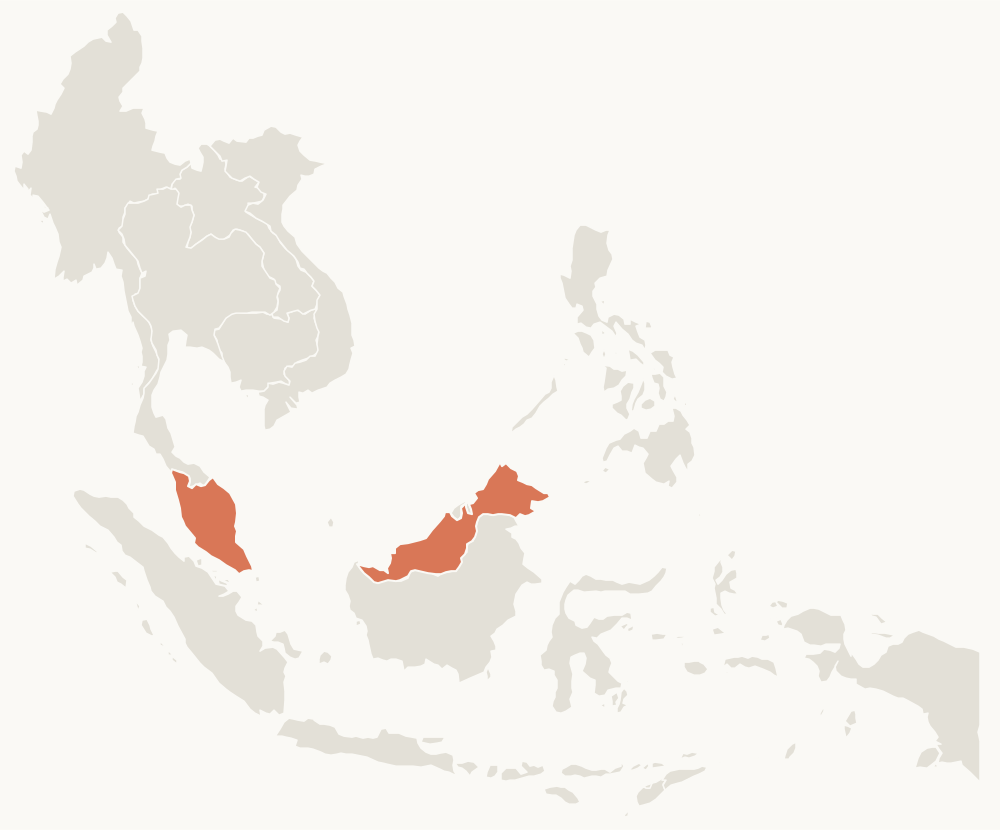 Malaysia, Singapore
Rest of WorldAnalysis
Global South merges US chips and Chinese open-source AI
Kinling Lo · September 16, 2026
Analyses how middle powers are buying Nvidia hardware while running Chinese open-weight models, with Malaysia weighing Huawei accelerators for its sovereign AI and Singapore signing Pax Silica while entertaining WAICO. Argues that US pressure to pick a side is pushing countries toward keeping both options open.
Responds to the Pax Silica and WAICO recruitment drives and Malaysia's sovereign AI planning.
Southeast Asia, Indonesia +3The Interpreter (Lowy Institute)Opinion
The quiet regionalisation of AI governance
Sameera Pillai · September 3, 2026
Argues that with global AI rule-making stalled by superpower rivalry, regional blocs are where binding rules are actually being made, and that ASEAN's move to embed AI provisions in its Digital Economy Framework Agreement is the leading example. Accepts fragmentation as the price of progress, to be softened by shared technical standards.
Builds on the coordinated Grok bans by Indonesia, Malaysia and the Philippines and the May 2026 conclusion of the ASEAN DEFA.
Southeast Asia, Vietnam +4FulcrumOpinion
Southeast Asia and AI Adoption: The Return of Cold War Strategies
Tobias Burgers and Tran Nguyen · August 31, 2026
Reads Vietnam's AI law and Singapore's local models as Cold War-style hedging between US and Chinese AI ecosystems, then argues that national efforts are too small to matter. Proposes collaborative hedging through a regional public-private consortium modelled on Airbus.
Connects to Malaysia's ILMU model, Vietnam's December 2025 AI Law and the region's sovereign AI turn.
Southeast Asia, Myanmar +2The Interpreter (Lowy Institute)Opinion
No, Mark Zuckerberg, the future is not (yet) for everyone
Karryl Kim Sagun Trajano and Brendan Luyt · August 28, 2026
A Southeast Asian rejoinder to Meta's promise of superintelligence for all, arguing that access without infrastructure, local relevance and accountability simply scales harm, as Meta's record in Myanmar and Philippine elections showed. Asks who controls distribution and who captures the benefits.
Responds to Zuckerberg's superintelligence manifesto and to regional capability gaps in compute and chips.
Southeast Asia, Singapore +3Tech for Good InstituteOpinion
How AI Levels the Playing Field for Small Businesses
Kirti Pathania · August 28, 2026
Notes that only about 3 percent of ASEAN enterprises have embedded AI into daily workflows and warns that early-adopter advantages could entrench large incumbents, as happened with online travel agents. Recommends SME-technology partnership ecosystems, leadership training and adoption grants so the 97 percent of firms that are SMEs are not left behind.
Aligns with the Philippines' push, as ASEAN chair, for a Leaders' Declaration on AI-powered MSMEs at the November summit.
Singapore, Southeast AsiaThe DiplomatOpinion
AI, Scams, the Law, and Governance: A Conversation With David Tan
Luke Hunt (interview with David Tan) · August 27, 2026
An NUS law scholar argues that regulators should concentrate on AI harms that are permanent, proliferating and pernicious, such as intimate-image and child abuse, rather than trying to regulate everything, and that common law plus online-safety commissions can do much of the work. Frames Southeast Asia's scam industry as the sharpest test of that approach.
Sits within the region's post-Grok debate about online-safety regulators and cross-border coordination.
Southeast Asia, Malaysia +3South China Morning PostOpinion, paywalled
As the US and China compete over AI, Asean must secure strategic autonomy
AbdulWahed Jalal Nori · August 27, 2026
Argues that ASEAN is fast becoming the physical centre of the AI economy through data centres while depending on outsiders for chips, models, cloud and standards, and that the real choice is between dependence and agency rather than dominance and isolation. Calls for control over the infrastructure and knowledge behind AI.
Connects to the Pax Silica versus WAICO pressure on the region in August 2026.
SingaporeCNAOpinion
Commentary: Workers shouldn't have to figure out AI on their own
Trevor Yu Kang Yang · August 21, 2026
An NTU management scholar argues that Singapore's Economic Strategy Review can set direction, but real AI transformation happens only when employers redesign individual jobs rather than leaving staff to improvise with chatbots. He calls for structured job redesign, manager accountability and worker involvement.
Responds to the Economic Strategy Review's AI strategies and to PM Lawrence Wong's pledge to protect every worker, not every job.
SingaporeThe Straits TimesOpinion, paywalled
Wealthy nations fear AI, but Singapore embraces it: Here's why
Vikram Khanna · August 20, 2026
Khanna notes that survey data shows rich countries are anxious about AI while developing countries are excited, and that Singapore is an outlier among wealthy states in being optimistic. He attributes this to state-led reskilling, tight labour markets and a governance culture that treats AI as a national project rather than a threat to be resisted.
Responds to global attitude surveys on AI and Singapore's 2026 push (Economic Strategy Review, National AI Council) to position itself as an AI hub.
Southeast Asia, Vietnam +2The DiplomatOpinion
How Southeast Asia and the Gulf Can Shape the Future of AI
Kelly Forbes, Bruce Li and Hamzah Bin Zaid · August 18, 2026
Argues that two regions that make neither chips nor frontier models are turning their rule-taker status into leverage by pairing Gulf capital with Southeast Asian markets, talent and demand. Points to G42's Vietnam deal and UAE-Malaysia agreements as a template for middle-power AI cooperation.
Follows the February 2026 G42-Vietnam infrastructure framework and the wave of Gulf investment into regional data centres.
Southeast Asia, SingaporeHyphen Partners (Substack)Analysis
EP-197: Southeast Asia's Next AI Challenge is Integration
Hyphen Partners · August 13, 2026
Argues the region has moved from buying compute to the harder problem of integration, citing a Singapore study showing AI adoption has not yet produced clear productivity gains and that firms with prior digital investment do best. Governments are shifting emphasis to workforce training and process redesign.
Follows the newsletter's February issue on the McKinsey-EDB survey of ASEAN AI adoption.
Southeast Asia, Indonesia +3Tech for Good InstituteOpinion
The Architecture of Inclusion: Balancing Southeast Asia's AI Infrastructure Boom
Shammi Thakur · August 12, 2026
Frames AI readiness as three layers (compute, physical utilities such as data centres and power, and a facilitator layer of governance, data flows and talent) and argues the region's advantage will depend on equitable access rather than raw build-out. Warns that uneven access for small firms, grid strain and fragmented rules could concentrate gains in large corporations, and calls for shared compute treated as a public good.
Responds to the ASEAN-Korea HPC facility in Indonesia, new cloud regions in Bangkok and Kuala Lumpur data-centre investment.
Southeast Asia, Singapore, IndonesiaEast Asia ForumOpinion
Southeast Asia's costly AI bargain with US tech giants
Govand Khalid Azeez · August 4, 2026
Reads the deals between OpenAI, Meta and Google and regional telcos such as Singtel and Telkomsel as a new dependency: the region supplies data, infrastructure and users while control of models and surplus stays abroad. Argues that sovereign LLM projects do not change this and that ownership and value distribution must be renegotiated.
Connects to survey evidence that regional optimism about AI is softening, and to Washington's suspension of foreign access to an Anthropic model.
Southeast Asia, Thailand +4FulcrumOpinion
Southeast Asia Cannot Fight Online Sexual Abuse One Takedown at a Time
Nuurrianti Jalli · July 31, 2026
Argues that takedown-and-prosecute approaches cannot keep up with generative AI tools that mass-produce non-consensual sexual imagery, and that regulators should impose systemic duties on platforms to assess risk and design in safeguards. Matters because the Grok episode showed how quickly synthetic abuse scales across the region.
Follows the early-2026 Grok bans in Indonesia, Malaysia and the Philippines and draws on Australian and EU online-safety models.
Southeast Asia, Cambodia +6Foreign PolicyAnalysis, paywalled
China Pitches Its AI Leadership to the World
Joseph Rachman · July 22, 2026
Reports from the Shanghai AI conference that five Southeast Asian states joined China's new World AI Cooperation Organisation as founders while Singapore and Thailand stayed out, and reads this split as the region hedging rather than aligning. China's open-source pitch lands well with governments that cannot afford proprietary Western stacks.
Frames the WAICO launch as Beijing's answer to Washington's more transactional AI posture.
Southeast Asia, Singapore +3Asia TimesAnalysis
ASEAN's AI race is officially underway
Chris Taylor · July 17, 2026
Argues the regional contest to host AI data centres will be decided by reliable power and water, not headline investment figures, with Singapore's capacity rationing pushing demand into Johor, Thailand and Indonesia. Governments must also manage community backlash and the tension between US chip access and Chinese capital.
Written as Malaysia and Thailand posted record data-centre pipelines in the first half of 2026.
SingaporeThe Straits TimesOpinion, paywalled
Who should own AI? The case against, and for, nationalisation
Vikram Khanna · July 14, 2026
A reply to a Business Times essay by DBS chief economist Taimur Baig and Anthony Annett arguing that parts of the AI industry should be nationalised like nuclear weapons or central banks. Khanna argues the state should act as referee and sandbox-builder rather than owner, while conceding a narrow case for public control of the most dangerous capabilities.
Part of a Singapore debate over the role of the state in frontier AI after calls for a development pause and Anthropic's export controls earlier in 2026.
SingaporeCNAOpinion
Commentary: AI has changed the way my students write and that worries me
Kennedy Albar · July 14, 2026
A Singapore university lecturer describes how generative AI has flattened student writing into fluent but shallow prose and warns that students confuse access to polished answers with genuine understanding. He argues assessment and teaching must change so that thinking, not output, is what gets rewarded.
Part of a regional wave of educator commentary on ChatGPT in classrooms in the 2026 academic year.
Southeast Asia, Singapore +5Asia Society Policy Institute (Asia Policy Substack)Analysis
ASEAN Hedges With Pax Silica
Faye Simanjuntak · July 8, 2026
Examines why only Singapore and the Philippines have joined the US-led Pax Silica initiative to secure AI and semiconductor supply chains, while other ASEAN states prefer bilateral trade and critical-minerals deals with Washington. Argues the pattern reflects doubts about US commitment and a belief that bilateral arrangements deliver similar benefits without formal geopolitical alignment, with US restrictions on advanced AI models undercutting trust.
Responds to the Trump administration's Pax Silica push and its AI export package for allies.
SingaporeCNAOpinion
Commentary: How will SAF prepare for the age of AI-enabled warfare?
Nicholas Fang · July 8, 2026
Written around SAF Day, the piece argues that the Singapore Armed Forces must rethink the relationship between soldiers and machines as AI-driven drones and decision tools reshape warfare. It calls for doctrine, training and ethical guard rails to keep humans meaningfully in control.
Connects to reports of AI being misused in the Russia-Ukraine drone war and the SAF's own push into autonomous systems.
Southeast Asia, Malaysia +5Tech for Good InstituteOpinion
The Balancing Act: Harmonising AI Development and Governance in Southeast Asia
Bryan Yeoh Quan Jin and Calvin Woo · July 6, 2026
Argues that with nearly half of regional firms scaling AI beyond pilots, Southeast Asia needs governance that combines ASEAN-level coordination with national rules suited to a multilingual, multicultural region. Surveys the spectrum from Vietnam's binding law to Singapore, Thailand and Indonesia's soft-law approaches and Malaysia's proposed bill.
Written by Malaysia's Centre for the Fourth Industrial Revolution as Malaysia drafts its AI Governance Bill and ASEAN finalises DEFA.
SingaporeThe Straits TimesOpinion, paywalled
We can't wait for an AI crisis before taking action
Simon Chesterman · July 6, 2026
Singapore's leading AI law scholar argues that governance should not wait for a headline disaster, and that the city-state's framework-driven approach needs to move from guidance toward enforceable safeguards before harms accumulate.
Published as Singapore ran consultations on agentic AI and AI-related intellectual property.
Southeast Asia, Malaysia +2East Asia ForumOpinion
ASEAN must strike a balanced AI relationship with China
Kelly Forbes and Cass Maughan · July 3, 2026
Argues that China's open models, cloud and hardware give ASEAN real gains but that unmanaged integration risks dependency, lost sovereignty and friction with Washington. Calls for coordinated regional hedging through the Digital Economy Framework Agreement plus investment in domestic compute and capability.
Follows the 2026 ASEAN Digital Ministers' Meeting commitments to a joint AI centre with China and Malaysia's 2025 Huawei chip episode.
Southeast Asia, Thailand +2FulcrumAnalysis
The US-China AI Chip War: Southeast Asia's Compliance Dilemma
Gerald Mako · July 2, 2026
Explains how regional governments are squeezed between courting AI data-centre investment and policing the diversion of export-controlled Nvidia hardware to China, as Washington shifts to enforcement based on ultimate ownership. Argues the region must build export-control capacity or risk sanctions and investor flight.
Prompted by US allegations in May 2026 against a Bangkok firm linked to Thailand's national AI push; compares Malaysia's strategic trade permits and Singapore's controls.
SingaporeCNAOpinion
Commentary: The true cost of AI scams isn't financial - it's human
Han Fook Kwang · July 2, 2026
The veteran editor uses a deepfake scam built around a fake interview with a Singapore public figure to argue that the real damage of AI fraud is the erosion of trust in what people see and hear. He says governments and international bodies must take a more active role in steering how the technology develops and for what purpose.
Responds to a wave of AI-generated deepfake scams in Singapore and platform accountability debates.