- 8.4%
- People using generative AIMicrosoft AI Diffusion Report, 2026-Q2
- 0.3
- Claude use per personAnthropic Economic Index, 2025-08
- 124
- ChatGPT messages per person, world rankOpenAI Signals, 2026-Q2
01
Who is using AI
02
What governments are doing
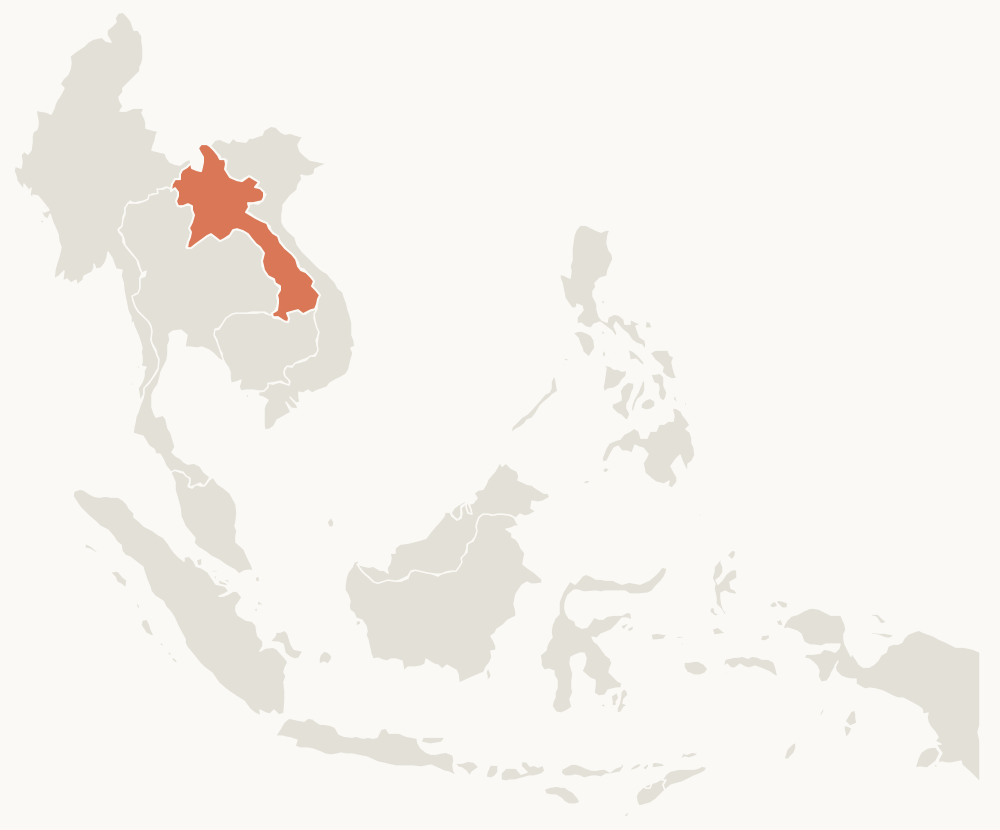
Laos
Verified September 29, 2026
- Strategy
- Draft National Strategy on Artificial Intelligence 2026-2035Draft, 2026
- AI law
- None
- Guidance
- None
- Data law
- Law on Electronic Data Protection No. 25/NA (Lao: ກົດໝາຍວ່າດ້ວຍການປົກປ້ອງຂໍ້ມູນເອເລັກໂຕຣນິກ)Enacted, May 12, 2017
- Sector rules
- ICT-AI Competency Standards for Teachers2025Competency benchmarks (December 2025) for teachers' use of ICT and AI, tied to the National STI Strategy 2026-2040 and National Teacher Policy launched 2026-06-05; guidance for the education sector, not a binding rule.
Posture: Laos is at the pre-strategy stage. There is no AI law, no government-issued AI ethics framework and no sector AI rules; the only AI instrument with any status is a draft ten-year National AI Strategy (2026-2035) that the cabinet approved in principle on 2026-09-23 and returned to MTC for revision, so it is not yet adopted and its text is not public. Name variants: MTC was the Ministry of Post and Telecommunications (MPT) until 2021 and its website still carries MPT branding; the Brookings profile calls it MOTC. The digital roadmap is one bundled document (Vision 2021-2040, Strategy 2021-2030, Plan 2021-2025) dated December 2021 and posted 2023-01-16 on mtc.gov.la; the government said in January 2026 it is finalising a National Digital Transformation Plan 2026-2030 for the National Assembly, which is separate from the AI strategy. The data protection law is a 2017 statute limited to electronic data; the in-force date is quoted by law firms as 2017-05-12 (the adoption date) but Lao laws take effect on presidential promulgation, so treat the exact date as unconfirmed; a Law on Cybersecurity was before the National Assembly in June 2025 (KPL id 92111) and its final status was not confirmed. UNESCO wording ('sets course for National AI Strategy', January 2026) has been misread by some outlets as a launch of the strategy itself; what was launched was the RAM report. The July 2025 Prime Minister's order on digital ID integration and the 2023 presidential decree creating the National Digital Transformation Committee are digital-government measures with no AI provisions. The LaoAI assistant (April 2026) is a government product, not a policy. Web search budget was exhausted mid-audit, so trackers (OECD.AI, IAPP, Digital Policy Alert) were not directly checked; ISEAS 2026 and Brookings 2025 served as the tracker layer, and both list Laos among the ASEAN members with no AI strategy or AI-specific law.
03
What researchers are finding
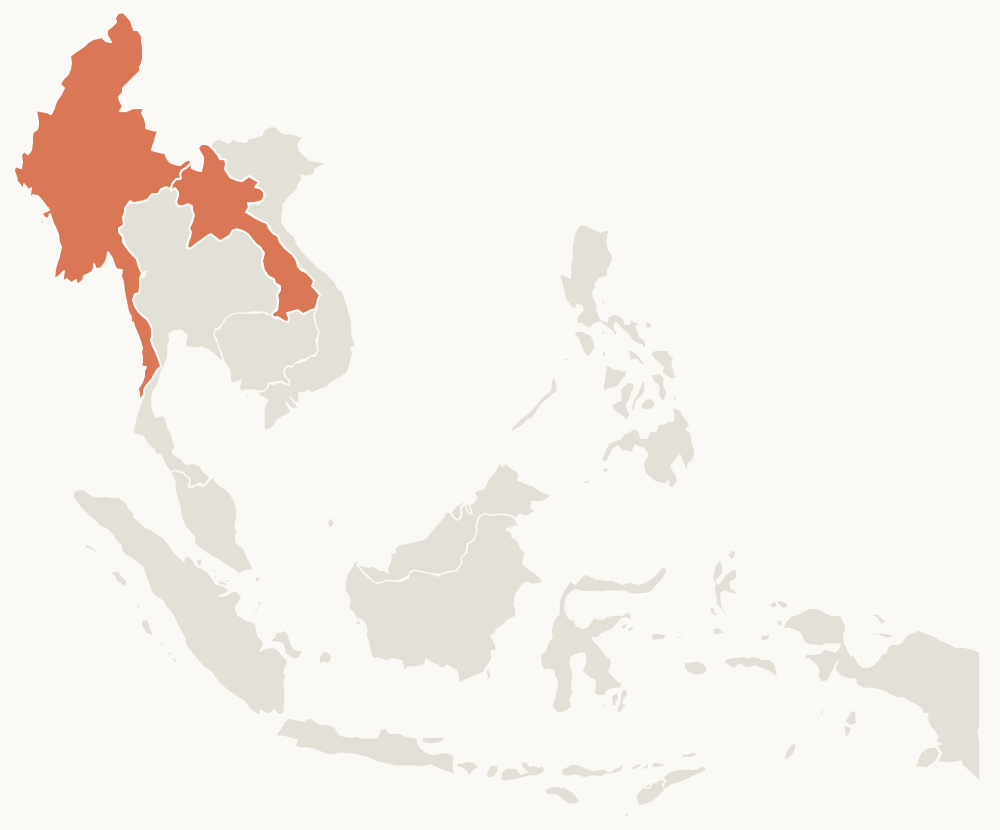 Myanmar, Laos
Language and models
From Reliable Text to Real Voices: Trust-Aware Progressive Adaptation for Low-Resource TTS
Shows that Burmese and Lao voice-cloning systems pronounce words more accurately when trained first on clean synthetic speech and only then on real recordings, with unreliable automatic transcripts down-weighted.
Preprint · September 22, 2026 · arXiv 2609.25951
LaosGovernment and rules
Lao PDR: Artificial Intelligence Readiness Assessment Report
Provides the first structured assessment of Lao PDR's readiness to govern AI, identifying priority sectors and gaps in policy, institutional coordination, human capacity and infrastructure ahead of a national AI strategy.
Report · March 17, 2026 · UNESCO AI Readiness Assessment Methodology country report
LaosLanguage and models
LaoBench: A Large-Scale Multidimensional Lao Benchmark for Large Language Models
LaoBench is the first large multidimensional benchmark for Lao, covering cultural knowledge, curriculum-aligned schooling and Lao-Chinese-English translation.
Journal article · November 14, 2025 · arXiv 2511.11334 / ACL 2026 Main
LaosSchools and universities
AI in Lao Education: Balancing Workload Management and Skill Development in Higher Education
Lao university students and lecturers report AI boosts efficiency but risks hollowing out foundational skills, amid uneven digital access.
Journal article · October 28, 2025 · Asian Education and Learning Review 4(1)
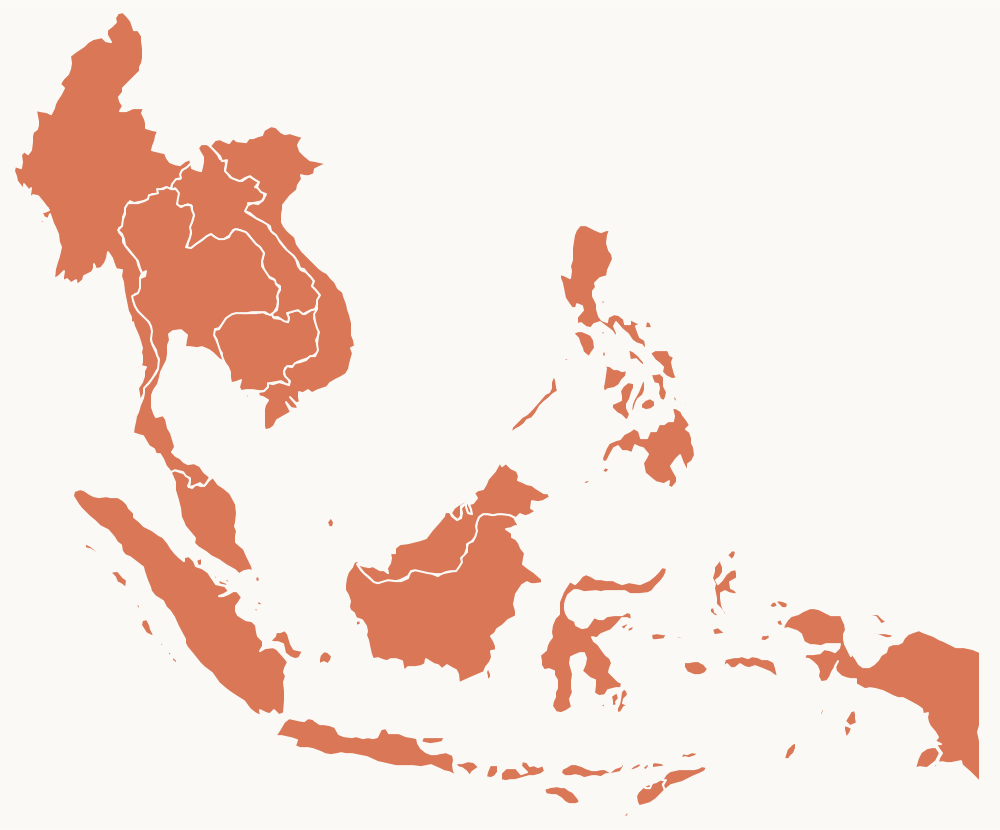 Southeast Asia, Brunei +10
Government and rules
AI Safety Governance, the Southeast Asian Way
Surveys AI safety and governance moves in every Southeast Asian country, including Timor-Leste, and argues the region is converging on a pragmatic, development-first model distinct from EU or US approaches.
Report · August 25, 2025 · Brookings Governance Studies report
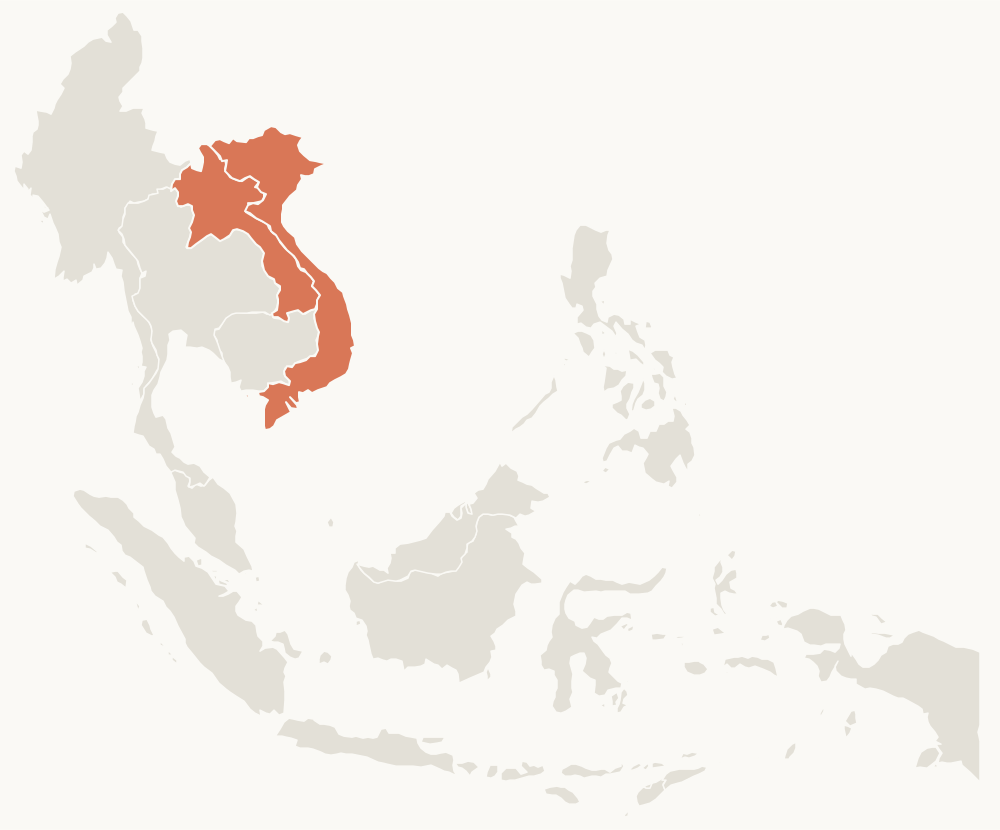 Laos, Vietnam
Jobs and the economy
The impact of artificial intelligence on labor markets in developing countries: a new method with an illustration for Lao PDR and urban Viet Nam
Develops a text-similarity method to port US-based AI exposure measures to developing-country skills surveys and finds urban Vietnamese workers face more displacement-type AI exposure than workers in Lao PDR.
Journal article · July 1, 2023 · Journal of Evolutionary Economics 33(3)
04
What people are saying
Southeast Asia, Cambodia +6Foreign PolicyAnalysis, paywalled
China Pitches Its AI Leadership to the World
Joseph Rachman · July 22, 2026
Reports from the Shanghai AI conference that five Southeast Asian states joined China's new World AI Cooperation Organisation as founders while Singapore and Thailand stayed out, and reads this split as the region hedging rather than aligning. China's open-source pitch lands well with governments that cannot afford proprietary Western stacks.
Frames the WAICO launch as Beijing's answer to Washington's more transactional AI posture.